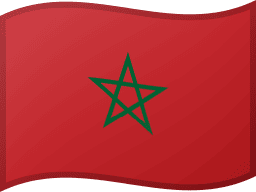

Morocco
Last updated:
An active international armed conflict continues in Western Sahara against the Polisario Front, with recurring drone strikes east of the Berm since 2021. No independently verified international humanitarian law violation has been established, but access to affected areas is restricted. Two strikes on artisanal miners at Mijek (in 2022 and 2024), both corroborated by the UN monitoring mission in Western Sahara (MINURSO), are the strongest evidence of violations to date. Much larger casualty allegations by the Sahrawis remain unverified.
UN treaty bodies and special procedures have repeatedly found Morocco’s police, gendarmerie, and other security actors responsible for torture, coerced confessions, arbitrary detention, and disproportionate force — most recently in 2025 Gen Z protests in which three unarmed protesters were killed by the security forces. Accountability institutions exist, but adverse findings are rarely implemented and complainants face reprisals.
Morocco is a net importer of arms with a functioning, if untransparent control framework. No post-1991 diversion or unauthorized re-export of Moroccan-imported arms has been documented. Caveats are that Morocco’s own reporting in connection with the United Nations Programme of Action on Small Arms and Light Weapons leaves key diversion and risk-assessment questions unanswered.
International legal context
Disarmament Treaties
| Instrument | Status | Comment |
|---|---|---|
| 1980 Convention on Certain Conventional Weapons (CCW) | State Party | |
| 1980 CCW Protocol I (Non-Detectable Fragments) | Not Party | |
| 1996 CCW Amended Protocol II on mines | State Party | |
| 1980 CCW Protocol III on incendiary weapons | Not Party | |
| 1995 CCW Protocol IV on blinding laser weapons | State Party | |
| 2003 CCW Protocol V on explosive remnants of war | Not Party | |
| 2001 Firearms Protocol | State Party | |
| Optional Protocol to the CAT | State Party |
International Humanitarian Law Treaties
| Instrument | Status | Comment |
|---|---|---|
| 1949 Geneva Conventions | State Party | |
| Additional Protocol I of 1977 | State Party | |
| Additional Protocol II of 1977 | State Party |
International Criminal Law Treaties
| Instrument | Status | Comment |
|---|---|---|
| 1998 Rome Statute of the International Criminal Court | Not Party | |
| Amendments to the Statute on the crime of aggression | Not Party | |
| Amendment to the Statute on blinding laser weapons | Not Party | |
| Amendment to the Statute on the intentional starvation of civilians in NIAC | Not Party |
International Human Rights Treaties
| Instrument | Status | Comment |
|---|---|---|
| 1966 Covenant on Civil and Political Rights | State Party | |
| Optional Protocol to the ICCPR | State Party | |
| 1966 Covenant on Economic, Social and Cultural Rights | State Party | |
| 1981 African Charter on Human and Peoples’ Rights | Not Party | |
| 1948 Genocide Convention | State Party | |
| 1984 Convention against Torture | State Party | |
| Convention on the Rights of the Child (CRC) | State Party | |
| Optional Protocol to the Convention on the Rights of the Child on the involvement of children in armed conflict | State Party | |
| 2004 Arab Charter on Human Rights | Not Party | Signed 2004; not yet ratified. |
| Organisation | Status | Comment |
|---|---|---|
| United Nations | Member State | |
| International Court of Justice | Did not accept compulsory jurisdiction | |
| African Union | Member State | |
| International Atomic Energy Agency (IAEA) | Member State | Safeguards agreement in place |
Domestic Legal Context
Imports, Exports, and Supplier Base
Morocco is primarily an importer of major conventional arms. According to the SIPRI’s Arms Transfer Database, its international arms transfers consist overwhelmingly of imports from foreign suppliers, while it has no significant record as an exporter of major conventional weapons. At the same time, Morocco has begun laying the foundations of a domestic defence-industrial base through industrial partnerships, local manufacturing initiatives and maintenance capabilities, supported by Law No. 10-20 (2020) and its implementing legislation (see National Framework below). Although Morocco has not yet emerged as a significant defence exporter, these reforms indicate an ambition to progressively develop indigenous production capacity and, over the longer term, potential export capabilities.
According to SIPRI’s Trends in International Arms Transfers 2025, Morocco was the largest recipient of major arms in Africa in 2021–25, ranking 28th globally and accounting for 1.0 per cent of global major arms imports. Moroccan imports of major arms increased by 12 per cent in 2016–20 and 2021–25, while overall African imports declined by 41 per cent over the same period. SIPRI identifies Morocco and Algeria as the two largest arms importers in Africa, with longstanding regional tensions contributing to continued military modernisation. In 2021–25, the United States accounted for 60 per cent of Morocco’s major arms imports, followed by Israel (24 per cent) and France (10 per cent).
Morocco’s procurement profile reflects a gradual diversification beyond its traditional reliance on France and the United States. While the United States remains Morocco’s principal supplier of advanced combat aircraft, armoured vehicles, and precision-guided weapons, France continues to provide important aviation, artillery and naval capabilities. Since the normalization of relations with Israel in 2020, defence cooperation has expanded significantly, including the acquisition of Israeli rocket artillery, missile systems, and unmanned (drone) technologies. Morocco has also strengthened defence procurement and industrial partnerships with Türkiye, China, India and several Gulf nations, reflecting a strategy to diversify sources of supply and access additional military technologies.
Historically, Morocco relied predominantly on French and US suppliers, while also acquiring Soviet-origin equipment. SIPRI Arms Transfers Database records major Cold War acquisitions including 50 Mirage F-1combat aircraft from France, 54 F-5A/E Tiger aircraft from the United States and Iran, M48 and M60 Patton main battle tanks, AMX-series armoured vehicles, artillery systems and substantial stocks of anti-tank and air-defence missiles. Since the late 1990s, Morocco has pursued force modernization for both air and ground assets, including unmanned capabilities. Major acquisitions recorded by SIPRI include 24 F-16C Block 50 fighters, 24 F-16V aircraft ordered in 2020, 384 M1A1 Abrams main battle tanks, 19 Bayraktar TB2 armed drones, Israeli PULS rocket artillery systems, and other long-range precision strike capabilities (SIPRI Arms Transfers Database). Detailed information on Morocco’s armed forces inventory is provided in the following section.
Morocco has also increasingly sought to leverage defence procurement to support domestic industrial development. Law No. 10-20 (2020) and Decree No. 2-21-405 (2021) established the legal framework governing domestic manufacture and assembly of defence equipment, while Decree No. 2-22-431 (2023) encourages local manufacturing, technology transfer, skills development and investment. In parallel, Morocco has concluded partnerships with Israeli, Indian, Turkish and US companies involving manufacture, assembly, or maintenance of equipment, particularly armoured vehicles and drones.
Despite these developments, Morocco remains a marginal exporter of military equipment. The SIPRI Arms Transfers Database records historical transfers including nine T-28D aircraft to Haiti (1969), eight T-28D aircraft to Honduras (1978), six AMX-13-75 light tanks to Algeria (1962) and, more recently, 90 T-72B tanks transferred to Ukraine in 2024. These transfers remain exceptional and do not alter Morocco’s overall profile as a major net importer of conventional arms.
Domestic legislation relevant to the Arms Trade Treaty
Morocco is not a State Party to the ATT. Its national framework governing defence equipment, arms and ammunition is nevertheless extensive, and rests on a series of instruments layered from a 1930s general prohibition-and-licensing regime, through a 2020 framework law providing the basis for the development of a domestic defence industry, to a dedicated 2022 firearms statute and implementing decrees and customs circulars extending into 2025.
National Framework
The oldest instruments still of record are two 1930s Dahirs (royal decrees), both still cited by Morocco in its national reporting under the UN Programme of Action on Small Arms and Light Weapons (PoA) and International Tracing Instrument (ITI): one of 11 March 1936, prohibiting the import, export, transit and trans-shipment of war matériel, and another of 31 March 1937, regulating the import, trade, carriage, possession, and storage of arms and ammunition more broadly, amended six times between 1939 and 1957. Alongside them, Morocco’s reporting also lists a Dahir of 2 September 1958 on repression of related infractions, Law 03-03 on counter-terrorism (2003) and the 1977 Customs Code as further adjunct instruments relevant to arms control.
The fragmented regime was superseded for defence and security equipment, arms and ammunition by Law No. 10-20 of 25 July 2020 (Dahir n° 1-20-70), and its implementing Decree No. 2-21-405 of 28 June 2021, establishing a unified authorization regime covering the import, export, manufacture, and trade of arms and munitions. A policy paper reviewing the new legislation assessed that, in addition to its normative coherence and completeness, the framework complies with the main requirements of international regulations on arms trade and the fight against illicit arms trafficking.
Law No. 10-20 classifies controlled items into three categories:
Category A is defence equipment, weapons and ammunition intended for military purposes, subject to strict level of control (independently corroborated as covering items such as tanks, fighter aircraft, radar systems, armed drones and cyber-defence equipment).
Category B is security and law-enforcement equipment, weapons and ammunition, including riot-control equipment.
Category C covers weapons and ammunition intended for civilian uses such as hunting, sport shooting and traditional arms, together with a separate list of dual-use goods subject to more flexible procedures adapted to their hybrid nature.
Manufacturing and assembly of defence equipment require prior authorization from the National Defence Administration, following review by the National Commission for Defence and Security Equipment, Arms and Ammunition. Authorizations are generally issued for ten years and carry obligations on reporting, marking, traceability, security, storage, and record-keeping. Authorized manufacturers must generally be companies with majority Moroccan ownership.
Implementation authority is split three ways. The National Defence Administration authorizes manufacture, import and export of defence equipment (export authorizations valid for up to three years); the Ministry of the Interior oversees domestic transport; and Customs (Administration des Douanes et Impôts Indirects, ADII) controls transit and trans-shipment.
The ADII issued a circular n° 6672/311 of 8 August 2025, clarifying procedures for manufacture, import, export, transit, trans-shipment, and transport of defence equipment, weapons and ammunition under Law No. 10-20 and its implementing texts. For the transit of Category A and B equipment, applicants must submit detailed documentation on the goods, transport routes, schedules and security arrangements; authorizations cover a single operation and can run from around three months for a transit up to three years for certain exports, and may be suspended on public-security grounds. The circular also sets operational security requirements for transport and trans-shipment – sealed, neutral packaging, temporary deactivation of weapons, physical separation of ammunition, and limits on on-site storage duration at ports and airports – together with prior Ministry of the Interior authorization for domestic transport specifying routes, arrangements and security measures. Special customs regimes (temporary admission, processing under customs control) accommodate military training, film productions, temporary exhibitions and repairs abroad, subject to the same security requirements.
The legal framework also imposes broader compliance and traceability obligations: marking and traceability of firearms, and record-keeping, storage, access control, physical security, decommissioning and destruction requirements attached to manufacturing authorizations. Compliance is overseen by a monitoring commission chaired by the National Defence Administration and composed of representatives of the relevant defence, security and customs authorities; authorizations may be suspended or withdrawn for non-compliance or on public-order or public-security grounds, and violations carry administrative sanctions and criminal penalties.
A dedicated firearms statute followed in the civilian area: Law No. 86-21 relating to firearms, their parts, components, elements, accessories and munitions was adopted in March 2022 and promulgated by Dahir n° 1-22-80 of 13 December 2022. Morocco’s most recent PoA national report (2024–25 cycle) cites Law 86-21 alongside Law 10-20, rather than the 1937 Dahir, as its governing instruments for firearms.
Defence procurement is governed principally by Decree No. 2-22-431 of 8 March 2023 on public procurement, which establishes dedicated procedures for national defence and public security contracts. It permits derogations from the ordinary tender regime where justified by confidentiality or national security and authorizes industrial offset clauses in major defence contracts, covering direct investment, local manufacture or assembly, technology and skills transfer, workforce training, and integration of locally produced components. Offsets involving manufacture or assembly in Morocco fall under the Law No. 10-20/Decree No. 2-21-405 authorization regime described above.
The industrial framework keeps expanding: Decree No. 2-23-925 of 1 June 2024 created two dedicated Industrial Acceleration Zones for defence industries, in Casablanca and Benslimane, to host defence manufacturing, assembly, maintenance and related activity under a dedicated regulatory regime [Le360, 2024]; a 2025 follow-up decree established the management company responsible for developing and operating the zones, with the stated aim of attracting Moroccan and foreign investment, supporting technology transfer and strengthening domestic defence-production capacity.
Oversight and transparency
As a State not party to the ATT, Morocco has not submitted annual reports and it has also not submitted national reports to the United Nations Register of Conventional Arms (UNROCA) – both limiting outside visibility into its arms transfers. Publicly available UNROCA information concerning transfers involving Morocco therefore derives primarily from reports filed by exporting States, including Belgium, Belarus, China, Czechia, Canada, France, the Republic of Korea, the Netherlands, South Africa, Spain, Türkiye, the United Kingdom, and the United States.
Morocco does, however, participate in other international transparency and small-arms control mechanisms: it has submitted national reports under the UN Programme of Action on Small Arms and Light Weapons and the International Tracing Instrument, for the 2020–2021, 2022-2023 and 2024–2025 reporting periods. The substance of that reporting is discussed under the section below, ‘National Capacity to Prevent Diversion’.
Key Weaponry in the Armed Forces
Strategic position and defence posture
Morocco’s strategic posture is primarily shaped by the unresolved dispute over Western Sahara and its longstanding rivalry with Algeria, which together dominate national defence planning and force development. The Royal Armed Forces (Forces Armées Royales – FAR) are principally tasked with maintaining control over Moroccan-administered Western Sahara, securing the defensive berm separating Moroccan- and Polisario-controlled territory, and maintaining a substantial military presence in the southern provinces and along the Algerian border. Following the breakdown in late 2020 of the ceasefire agreed upon in 1991, after Moroccan forces intervened to reopen the Guerguerat crossing, Morocco has maintained a sustained military presence in the territory while continuing to characterize its operations as defensive in nature.
The principal security challenge remains the Polisario Front’s Sahrawi People’s Liberation Army (SPLA), which continues to claim periodic attacks against Moroccan military positions east of the berm. There is an international armed conflict between the Sahrawi Democratic people’s Republic (SADR), an African Union member State, and Morocco. Janes notes that many such claims cannot be independently verified through open sources, although incidents such as projectile attacks on Smara in May 2026 illustrate the persistence of low-intensity hostilities. Morocco also faces a limited terrorist threat from Islamic State-linked cells, which are periodically disrupted by the security services, although Janes assesses that neither Islamic State nor Polisario fighters currently pose a significant threat to the stability of the Moroccan State. Beyond the Western Sahara conflict, Morocco also faces broader regional security challenges associated with instability in the Sahel and transnational trafficking networks operating across the wider Sahel-Maghreb corridor, reinforcing the importance of border security and territorial surveillance.
Morocco’s defence posture combines extensive experience in border security, desert operations and counterinsurgency with continued investment in conventional military capabilities intended to deter a technologically capable State adversary. According to Janes, while the Royal Moroccan Army’s operational experience has largely been shaped by the Western Sahara conflict, its force structure and procurement priorities remain oriented towards conventional warfare, with Algeria representing the principal reference scenario for deterrence planning. Recent modernization has therefore focused on strengthening armour in the armed forces, long-range fire capabilities, integrated air defence, combat aircraft and unmanned systems in the Royal Moroccan Air Force, and intelligence, surveillance, and reconnaissance (ISR) capacities.
Morocco has also expanded its international defence engagement through participation in multinational military operations and sustained bilateral defence cooperation. The Royal Moroccan Air Force deployed F-16 combat aircraft in support of the international coalition against Islamic State in Iraq and Syria in 2014 and contributed aircraft to the Saudi-led coalition in Yemen.
Composition of the Armed Forces
Army
The Royal Moroccan Army (Armée Royale Marocaine, ARM), the land component of the Royal Moroccan Armed Forces (Forces Armées Royales, FAR), is organized around two operational zones: the Northern Zone, responsible for the defence of Moroccan territory, and the Southern Zone, responsible for operations in Western Sahara and the defence of the defensive berm system established in the territory. The Army’s main headquarters are in Rabat and Agadir, with operational formations structured around mechanized infantry brigades, airborne-capable infantry, mechanized infantry regiments, and supporting logistics.
The majority of the Royal Moroccan Army’s combat forces remain deployed within the Southern Zone, where they secure Morocco’s control over Western Sahara. Army units are principally positioned along the approximately 2,700 km defensive berm (‘Hassan Wall’), built during the Western Sahara conflict, while additional formations are deployed along the Algerian border in response to longstanding tensions.
The FAR is supported by several paramilitary and security formations with complementary responsibilities, including the Royal Gendarmerie, the Auxiliary Forces, which undertake border protection and territorial security tasks, and the Mobile Intervention Companies (Compagnies Mobiles d’Intervention, CMI), which have significant security responsibilities, particularly in Western Sahara. The Royal Guard, a separate elite formation composed of approximately 1,500 hand-selected personnel, provides ceremonial and protective functions and includes infantry and cavalry elements.
Morocco has also sought to maintain and expand its available manpower base through changes to military service policy. Following the adoption of Law No. 44.18, compulsory military service was reintroduced in 2019 after having been suspended in 2006. The law fixed a 12-month service period for Moroccan citizens generally aged between 19 and 25 years, subject to statutory exemptions, with personnel entering the reserve system after completion of their service.
In parallel, Morocco has significantly increased defence expenditure, with much directed towards the modernization of military equipment. Procurement programmes have focused on strengthening conventional capabilities, including armoured warfare, artillery, air defence, and other major systems. Reporting has nevertheless indicated that investment has prioritised equipment acquisition over improvements to personnel welfare, including housing conditions and post-service support. Despite generally competitive salaries by Moroccan standards, concerns regarding living conditions and support for serving personnel have reportedly remained among some troops.
- Tanks and armoured vehicles and munitions
- Missiles and missile launchers
- Small arms and munitions
- Light weapons
The RMA maintains a mixed armoured fleet combining legacy platforms with a significant modernization effort. Its principal armoured capability is based on the US M1 Abrams main battle tank. The inventory records 222 M1A1SA/Enhanced tanks in service from 2016, together with 162 M1A2 tanks delivered and in service from 2023, giving the RMA a total Abrams fleet of 384 tanks. These acquisitions represent a major qualitative improvement over previous systems.
The Army also retains a significant number of legacy tanks. The inventory lists 220 M60A1 and 120 M60A3 main battle tanks, as well as 224 M48A5 tanks, of which 124 are listed as in service. These platforms are secondary to the Abrams fleet. Morocco also operates Russian- and Chinese-origin MBTs. The inventory records 88 T-72B tanks delivered, of which 40 are listed as in service, together with 12 T-72BK tanks in service. The Army also operates 54 Chinese VT1A tanks, delivered from 2010.
The RMA maintains a broad range of armoured mobility platforms supporting mechanised formations. The largest category consists of M113 armoured personnel carriers, including 420 M113A1, 172 M113A2, and 600 M113A3 vehicles, providing infantry transport and battlefield support capability. The Army also operates 422 M577A2 command vehicles, 320 VAB Mk 1 armoured vehicles, 75 VAB VCI infantry fighting vehicles, and 50 Ratel vehicles listed as operational.
Morocco also fields lighter armoured and reconnaissance platforms, including 108 AMX-10RC reconnaissance vehicles (of which 80 are listed as in service), 100 SK-105 light tanks (of which 30 are listed as in service), and 50 OT-64 armoured vehicles held in inventory but not listed as operational. Recent modernization has expanded wheeled mobility capabilities through acquisitions such as 36 Sherpa Light tactical vehicles and the WhAP 8×8 infantry fighting vehicle, with 5 vehicles delivered and in service out of 150 ordered.
The RMA maintains a diversified artillery capability combining self-propelled artillery, towed systems, mortar carriers, and multiple rocket launchers. The inventory includes 70 M109A5 self-propelled howitzers, alongside earlier M109 variants comprising 43 M109A2, 4 M109A3, and 1 M109A4 systems. Additional tracked artillery includes 100 Mk F3 155 mm self-propelled howitzers and 60 M110 heavy self-propelled howitzers. The inventory also includes 36 M106 self-propelled mortar carriers, providing mobile indirect fire support to mechanized formations.
In addition to its tracked artillery, Morocco operates a broad range of towed artillery systems, including 30 FH-70 155 mm howitzers, 36 L118 105 mm light guns, 18 M-46 130 mm field guns, 18 M101 105 mm howitzers, and 20 M114 155 mm howitzers, providing indirect fire support across a range of operational environments. The Army has expanded its long-range rocket artillery capability. The inventory identifies 36 BM-21 Grad multiple rocket launchers, 12 AR2 systems, 24 WS-2D systems, and 10 PULS rocket systems.
Morocco has also pursued acquisition of more advanced long-range fire support systems. Janes reported that around 30 CAESAR 155 mm truck-mounted self-propelled howitzers were ordered in 2020, although these systems are not yet reflected in the inventory. The inventory also records 18 M142 HIMARS launchers and associated M31A2 guided rockets as having been ordered but not yet delivered. These systems should therefore be considered part of Morocco’s future capability development.
The RMA maintains a layered ground-based air defence capability combining legacy anti-aircraft guns with modern missile systems. Short-range air defence includes 110 M163 Vulcan self-propelled 20 mm anti-aircraft guns, 42 M167 towed Vulcan air-defence systems, 300 ZU-23-2 twin 23 mm anti-aircraft guns, and 180 ZPU-2 anti-aircraft guns. Morocco has also modernized its air-defence capability through the acquisition of missile-based systems. The inventory records 12 Tunguska-M self-propelled gun-and-missile air-defence systems, 12 TL-50 surface-to-air missile systems, and 12 VL MICA surface-to-air missile systems, providing a layered short- to medium-range air-defence capability.
The Royal Moroccan Army maintains a diverse inventory of small arms and light weapons acquired from multiple suppliers over several decades. The inventory includes HK4, HK VP70, MAC Mle 50 and MAB PA-15 pistols; Beretta 70/223, M16A1, Steyr AUG, AK-47/AKM, FN FAL, G3, Valmet M76 and Beretta BM59 assault rifles; Beretta 38/49, MAT-49 and H&K MP5 sub-machine guns; RPD light machine guns.
Among light weapons are AAF-1 and M60 general-purpose machine guns, and Browning M2 HB 12.7 mm heavy machine guns. Infantry-support weapons comprise 120 mm Brandt and M43 mortars, 106 mm M40 recoilless rifles, 90 mm M56 anti-tank guns, 3.5-inch (89 mm) M20 anti-tank rockets, 66 mm M72 LAW light anti-tank weapons, RPG-7 rocket launchers, and anti-tank guided weapon systems including Malyutka (AT-3 Sagger), MILAN, TOW, GD-OTS Dragon, and the AIFV-B-MILAN launcher.
The inventory also includes the 9K32 Strela-2 (SA-7a Grail) man-portable surface-to-air missile system. Janes notes that RPG-7 launchers mounted on modified BRDM patrol vehicles are reported to be held in storage. Publicly available Janes reporting does not disclose quantities for these systems.
Air Force
The Royal Moroccan Air Force (FRA) is one of the three principal branches of the Royal Moroccan Armed Forces. Key air bases, including at Marrakech, Ben Guerir, and Kenitra, provide the infrastructure for operations. Combat aircraft are principally based at Ben Guerir Air Base, while transport and rotary-wing assets are distributed among the service’s principal operating bases.
Fighters and bombers
The FRA operates a combat aircraft fleet centred on modern multirole fighters and upgraded legacy combat aircraft. The inventory identifies the F-16C/D fleet as the Force’s principal combat aircraft capability, delivered in 2011, comprising 15 F-16C and 8 F-16D listed as in service.
The FRA also operates upgraded Mirage F1M aircraft, with the inventory recording 27 delivered of which 25 are in service. The inventory further records 24 F-5E aircraft (22 in service), and 4 F-5F aircraft, all listed as in service. These aircraft represent legacy combat platforms retained within the inventory.
Light attack aircraft
The RMAF operates aircraft capable of both advanced training and limited combat support missions. The inventory records 24 Dassault Alpha Jet E aircraft, of which 20 are listed as in service, classified as light attack and trainer aircraft.
Combat helicopters and armed rotary-wing aircraft
The RMAF is expanding its armed helicopter capability through the acquisition of AH-64E Apache attack helicopters. The inventory records 24 AH-64E aircraft ordered, with 12 delivered and in service from 2025. Janes reports that Morocco initially requested 36 AH-64E helicopters in 2019, with later reporting indicating an order for 24 aircraft. Once fully delivered, the Apache will provide Morocco with a dedicated attack helicopter capability.
Unmanned Aerial Vehicles (UAVs)
The RMAF has expanded its unmanned aircraft capability, including for strike missions. The inventory records 3 Heron 1 UAVs in service, 19 Bayraktar TB2 UAVs, 4 Wing Loong I UAVs, 3 Wing Loong II UAVs, and 2 Bayraktar Akinci UAVs. Janes reports that Morocco received Heron UAVs for surveillance missions and subsequently expanded its unmanned fleet through acquisitions of Bayraktar TB2, Wing Loong, and Akinci systems. The Akinci is described as a medium-altitude long-endurance unmanned combat aerial vehicle capable of ISR and armed missions. Janes also reported acquisitions of Harop loitering munitions and MQ-9B SeaGuardian UAVs. These systems are not, however, reflected in the current inventory.
Navy
The Royal Moroccan Navy (Marine Royale) is responsible for the defence of Morocco’s maritime approaches, territorial waters, and maritime interests, while contributing to the broader missions of the Armed Forces. The Navy is organized around two principal maritime commands corresponding to Morocco’s Mediterranean and Atlantic coastlines. These comprise the Northern and Southern Naval Commands, each divided into naval zones centred on the country’s main naval bases.
The service includes surface combat vessels, patrol forces, amphibious units, naval support elements, and a small naval aviation component. The Navy operates alongside other maritime security institutions, including the Royal Gendarmerie and coastal security forces, particularly for maritime surveillance, border protection, fisheries protection, search-and-rescue, and counter-smuggling activities.
Operational deployments are divided between the Atlantic and Mediterranean coasts. Surface combat ships are distributed between the Northern and Southern Naval Commands, while offshore patrol vessels and patrol craft conduct maritime security missions, including fisheries protection, surveillance, and support to coastal security operations, particularly in the Strait of Gibraltar and along the Atlantic coastline.
Frigates
The Royal Moroccan Navy’s principal combat capability is provided by a modern frigate fleet comprising one FREMM (Aquitaine-class) guided missile frigate, three Tarik Ben Ziyad (SIGMA 9813/10513)-class guided missile frigates, two Floréal-class frigates, and one Modified Descubierta-class frigate.
The fleet flagship is the Mohammed VI, a FREMM multi-mission frigate commissioned in 2014. Janes describes the vessel as significantly enhancing Morocco’s anti-surface, anti-air, and anti-submarine warfare capabilities while improving interoperability with NATO navies. The ship is helicopter-capable and equipped with advanced missile, sensor and combat management systems.
The three SIGMA-class frigates, commissioned between 2011 and 2012, represent the core of Morocco’s modern surface fleet. According to Janes, they are equipped with Thales TACTICOS combat management systems, SMART-S Mk 2 surveillance radars, Kingklip hull-mounted sonars, VL MICA surface-to-air missiles and MM40 Exocet Block III anti-ship missiles, providing credible multi-mission capabilities.
The two Floréal-class frigates, commissioned in 2002, and the older Modified Descubierta-class frigate continue to provide general-purpose maritime security, patrol and escort capabilities.
Patrol Forces
Patrol vessels constitute the largest component of the Royal Moroccan Navy and reflect Morocco’s increasing emphasis on coastal surveillance, fisheries protection, counter-smuggling, migration control and maritime law-enforcement missions.
The inventory records an extensive patrol fleet comprising 4 Lazaga-class patrol ships, 1 OPV 70 offshore patrol vessel, 5 Raïs Bargach-class offshore patrol vessels, 4 Osprey Mk II-class patrol vessels, 2 Okba (PR-72)-class patrol vessels, 6 Cormoran-class patrol vessels, 5 Damen 1503 fast patrol boats, 6 El Wacil-class patrol boats, 10 Rodman 101 patrol boats, 10 VCSM patrol boats, 2 Metal Shark 36 Fearless interceptor craft, 5 Metal Shark 52 Fearless Super Interceptor fast patrol craft, 18 Arcor 46 patrol boats, 15 Arcor 53 fast patrol boats, and 4 Erraid-class patrol boats.
Janes notes that this expansion reflects Morocco’s strategic priority of securing its extensive Atlantic and Mediterranean coastlines and protecting fisheries and maritime trade routes. The inventory also demonstrates continued modernization through the introduction of Damen and Metal Shark fast patrol craft. Janes further reports that Morocco has contracted an Avante 1800 offshore patrol vessel from Navantia. Although launched in 2025, the vessel does not yet appear in the current inventory and should therefore be regarded as a future capability.
Amphibious Forces
The Navy maintains a limited but functional amphibious capability comprising one Newport-class landing ship tank (LST), three Batral-class landing ships, one CTM mechanized landing craft, and a 50-metre landing craft tank (LCT) delivered in 2016. According to Janes, the LCT supports coastal logistics operations by transporting personnel, vehicles, fuel, water and military cargo, complementing the Navy’s limited sealift and amphibious support capability.
Naval Aviation
The inventory records three AS565MB Panther helicopters, two Bell 412EPI helicopters, and two King Air 350ER maritime surveillance aircraft. Janes reports that the AS565 Panther helicopters operate from the Navy’s larger surface warships and are capable of supporting maritime surveillance and search-and-rescue missions. The Bell 412EPI helicopters provide transport, utility and air assault capabilities, while the King Air 350ER aircraft strengthen maritime surveillance and reconnaissance.
Recent and current operations
Morocco’s operational activity remains centred on domestic territorial defence, particularly in Western Sahara, while maintaining a longstanding contribution to UN peacekeeping operations in Africa. The Royal Moroccan Armed Forces have also participated in coalition operations in the Middle East.
Peacekeeping Operations
Morocco remains one of the largest African contributors to peacekeeping operations. As of 2026, it was deploying more than 1,300 military and police personnel across UN missions in Africa, principally the United Nations Multidimensional Integrated Stabilization Mission in the Central African Republic (MINUSCA) and the United Nations Organization Stabilization Mission in the Democratic Republic of the Congo (MONUSCO). Moroccan contingents undertake force protection, civilian protection, engineering, medical support, and logistics missions. Morocco has been a continuous contributor to UN peacekeeping operations since 1960 and remains among the leading troop-contributing nations globally.
Coalition Operations against the Islamic State
Morocco participated in the international coalition against the Islamic State in Iraq and Syria. In 2014, the Royal Moroccan Air Force deployed six F-16 fighter aircraft from Ben Guerir Air Base to the United Arab Emirates in support of coalition air operations. Janes provides few operational details but notes Morocco’s contribution to the multinational campaign.
Operations in Yemen
Between 2015 and 2018, Morocco participated in the Saudi-led coalition against Ansar Allah (Houthis), contributing both air and ground forces. The Air Force deployed six F-16 fighter aircraft to Taif Air Base, Saudi Arabia, in 2015. One F-16C was lost during operations over northern Yemen in May 2015, though the circumstances of the loss are unclear. Morocco withdrew its air assets from the coalition in 2018. Janes reports that approximately 1,500 Moroccan special forces personnel were deployed in support of coalition ground operations. Elements of this contingent began returning to Morocco in 2016.
Maritime security operations
Morocco participates in NATO’s Operation Sea Guardian, the Alliance’s maritime security operation in the Mediterranean Sea, succeeding Operation Active Endeavour, to which Morocco had contributed since 2008 under the Mediterranean Dialogue framework. Cooperation includes maritime surveillance, information exchange and interoperability with NATO naval forces.
The Royal Moroccan Navy continues to support the operation through periodic deployments. In January 2024, the SIGMA-class frigate Sultan Moulay Ismail participated in a focused maritime patrol, conducting maritime surveillance, monitoring commercial shipping, collecting maritime situational awareness data, and strengthening operational cooperation with NATO partners.
Compliance with IHL and Human Rights by the Armed Forces
Western Sahara armed conflict
Western Sahara is the site of international armed conflict (IAC), both through foreign occupation without consent and as a result of the Polisario Front being accepted as a national liberation movement under Article 1(4) of Additional Protocol I. The Front’s unilateral declaration under Article 96(3) of the Protocol on 21 June 2015 was accepted by the Swiss Federal Council (the depositary) on 26 June 2015 — the first time such a declaration by a national liberation movement had been accepted. This means Morocco and the Polisario Front are bound by the 1949 Geneva Conventions and Additional Protocol 1 in their conduct of hostilities, including the rules on distinction, proportionality, and precautions in attack.
Morocco’s principal military theatre of operations remains Western Sahara, where Moroccan forces have maintained control over most of the territory since the conflict with the Polisario Front. On 13 November 2020, Moroccan forces moved into the UN-patrolled buffer zone at Guerguerat to clear a Polisario blockade of the Mauritania road; the Polisario Front responded by declaring the 1991 ceasefire ended and a return to armed struggle. Low-intensity hostilities have continued since, and the United Nations Mission for the Referendum in Western Sahara (MINURSO)’s mandate was renewed for a further year by UN Security Council Resolution 2797 of 31 October 2025 which also designated Morocco’s 2007 autonomy proposal as the sole basis for future negotiations — a significant diplomatic shift, with the United Kingdom, Portugal and Kenya joining roughly 118 States that now back the plan, and with Madrid hosting the first talks bringing all parties together in years in February 2026; the Polisario Front and Algeria continue to reject any outcome short of an independence referendum.
Morocco ratified Additional Protocols I and II to the Geneva Conventions on 3 June 2011, becoming a High Contracting Party on 3 December 2011. The FAR are therefore formally bound by the treaty provisions applicable to international and non-international armed conflicts, including obligations relating to distinction, proportionality, precautions in attack and protection of civilians. These obligations post-date the main phase of the Western Sahara conflict (1975–91), during which Moroccan forces were principally bound by the 1949 Geneva Conventions and customary IHL. In 2015, as mentioned, the Swiss Federal Council accepted a declaration by the Polisario Front that it was fighting on behalf of the Sahrawi people’s right to self-determination and that the conflict with Morocco was international in character.
Publicly available reporting confirms continuing low-intensity hostilities along the Berm and ceasefire line but provides limited independently verified information concerning Moroccan military conduct during operations since 2020. MINURSO continues to monitor developments and investigate incidents along the ceasefire line, although publicly available reporting has focused on Polisario-attributed attacks affecting civilians areas. MINURSO has investigated and publicly reported on specific incidents of rocket fire striking civilian areas near Smara, including an incident that killed one person and injured three, a Polisario rocket attack on 30 June 2025 that prompted a MINURSO field investigation, and a further attack on 5 May 2026 that injured at least one. These incidents are attributed to the Polisario Front, so they do not bear directly on an assessment of Moroccan forces’ conduct, but they show that some monitoring and investigation of specific incidents does take place along the line.
Public reporting on the conduct of hostilities by FAR since the resumption of fighting in November 2020 remains limited. Independent access to Western Sahara is restricted, and MINURSO does not publicly attribute responsibility for most military incidents. Nevertheless, open-source reporting indicates that Morocco has increasingly employed armed drones against Polisario Front positions and movements east of the Berm. MINURSO has reported continuing investigations into alleged aerial strikes east of the Berm, while Janes reporting has documented claims of Moroccan UAV use against Polisario targets.
Reported strikes have targeted Polisario military personnel, vehicles and logistical movements, including senior commanders. In April 2021, Polisario military commander Addah al-Bendir was reportedly killed in a strike attributed by Polisario sources to a Moroccan drone. The incident was not officially acknowledged by Morocco. In June 2026, senior Polisario commander Lehbib Mohamed Abdelaziz and two other Polisario fighters were reportedly killed in an alleged Moroccan drone strike near Mijek, east of the Berm. The United Nations confirmed that MINURSO had received reports of a drone strike targeting a Polisario military vehicle in the Mijek area, killing three people, and had requested the necessary security authorisations to investigate on site.
Media reporting also described an earlier alleged drone strike in the same area around 7 June 2026, near Akleibat El Foula, in which two vehicles were struck. The Coalition of Artisanal Mining Unions in Mauritania publicly disputed claims that Mauritanian nationals were among those targeted, asserting instead that the strike hit Sahrawis in a disputed area. Casualties in this incident could not be independently confirmed.
Some reported strikes have generated allegations of civilian casualties. The most widely reported incident occurred on 1 November 2021, when three Algerian nationals travelling in two commercial trucks near Bir Lahlou were killed in an aerial strike that Algeria attributed to Morocco. Morocco did not publicly acknowledge responsibility. MINURSO confirmed that it had inspected the site and observed two Algerian-registered trucks that had suffered extensive damage and charring; the Mission assessed that the damage was consistent with an air-to-ground projectile but did not independently verify the reported deaths.
Since then, Sahrawi organisations, including the Sahrawi Mine Action Coordination Office (SMACO), have alleged additional Moroccan drone strikes against civilian vehicles, nomadic populations, artisanal miners, and transport routes east of the Berm. According to SMACO – the Polisario Front’s own mine-action coordination office, established by presidential decree in 2013, reporting through the Front’s own media – Morocco carried out 73 drone strikes on civilians in 2021–23 alone (causing 160 Sahrawi, Algerian and Mauritanian victims, including 80 fatalities). A cumulative total of 310 civilians were reportedly killed between 2020 and 2025, a figure SMACO presented at the UN Human Rights Council in June 2026, with victims split roughly between travellers on commercial routes (58%), artisanal miners (36%) and herders or nomads (5%). As a party to the conflict reporting through its own outlets, SMACO’s figures should be read as an allegation rather than an independently verified count, and they have not generally been corroborated at this scale by the United Nations or other impartial monitoring bodies. These allegations have not generally been independently verified by the United Nations or other impartial monitoring bodies. MINURSO has continued to investigate alleged aerial and other strikes east of the Berm, but publicly available information does not permit a conclusive assessment of the lawfulness of individual strikes under IHL.
MINURSO has independently corroborated at least two such incidents at Mijek. On 1 November 2022, following reports of a strike near artisanal gold-mining sites, a MINURSO team visited the site on 3 November and found the charred remains of five people and a destroyed vehicle; a sixth victim, also reported to be an artisanal miner, later died in hospital in Zouérate, Mauritania. A further strike, north-east of the MINURSO team site at Mijek on 8 February 2024, allegedly killed four and injured two artisanal gold miners from Mali and Mauritania.
In both cases, and as with other strikes on vehicles east of the Berm, the reports attributed the incidents to Morocco without independently confirming responsibility, and did not resolve whether the victims were combatants or civilians – the same evidentiary gap that runs through this pattern of incidents. The UN Secretary-General’s October 2024 report noted improved MINURSO access to strike sites and more timely Moroccan security assurances for site visits over that reporting period, though publicly available information still does not permit a conclusive assessment of the lawfulness of individual strikes under IHL.
At the same time, Moroccan-controlled territory has continued to be affected by attacks attributed to the Polisario Front. MINURSO investigated projectile attacks against the town of Smara in October 2023 and later incidents in 2025, reporting that one 2025 attack involved rockets launched from approximately 40 kilometres east of the Berm. Following its investigation of the June 2025 incident, MINURSO reported that the projectiles had been launched from the direction of east of the Berm. The Mission also continued to monitor security incidents affecting civilian areas and repeatedly called on the parties to cease hostilities.
These incidents demonstrate that civilians on both sides of the ceasefire line remain exposed to the effects of the continuing low-intensity conflict. The unresolved conflict has also produced a protracted refugee situation. For 50 years, Algeria has hosted Sahrawi refugees, making it the world’s second longest-standing refugee situation. It is estimated that 173,600 individuals in five camps need humanitarian aid.
Landmines and the Berm
A longstanding humanitarian concern related to Morocco’s military posture in Western Sahara concerns the extensive mine contamination surrounding the approximately 2,700 km defensive Berm constructed between 1980 and 1987. According to UN Mine Action Service data, significant mine contamination remains along the Berm. Clearance operations have continued, with areas released and mines and explosive remnants of war removed; however, Morocco remains outside the 1997 Anti-Personnel Mine Ban Convention. Morocco has stated that resolution of the Western Sahara dispute remains a prerequisite for accession, while maintaining support to the Convention’s humanitarian objectives.
The continued presence of mines and explosive remnants of war represents the principal documented humanitarian issue directly linked to Morocco’s military infrastructure in Western Sahara.
Human rights concerns in the Western Sahara security environment
Torture and ill-treatment: Gdeim Izik case
The most extensively documented human rights case linked to Western Sahara is the dismantling of the Gdeim Izik protest camp near Laâyoune in November 2010 and the subsequent prosecution of 25 Sahrawis.
The events were primarily related to law-enforcement operations rather than FAR combat activity. The camp, established by thousands of Sahrawis protesting socio-economic conditions and discrimination, was dismantled on 8 November 2010 by police forces (Direction Générale de la Sûreté Nationale) and Auxiliary Forces, with the Royal Gendarmerie reportedly providing aerial support. Allegations of torture and ill-treatment during subsequent interrogations concern police and security personnel rather than identified FAR units.
FAR’s institutional involvement arose through the judicial process. In 2013, the defendants were convicted before the Permanent Military Tribunal of the Royal Armed Forces, which at that time retained jurisdiction over civilians, with convictions relying substantially on contested confession evidence. Following criticism of the military trial, Morocco amended its Code of Military Justice in 2014, removing military court jurisdiction over civilians. The case was subsequently transferred to the civilian justice system, although observers continued to raise concerns about alleged torture and reliance on disputed evidence.
The UN Committee against Torture (CAT) has subsequently found Morocco responsible for violations of the Convention against Torture in several individual complaints arising from the Gdeim Izik cases, including findings concerning failure to investigate allegations of torture, failure to exclude evidence allegedly obtained under torture, and lack of adequate remedies. These findings concern the conduct of law-enforcement and judicial authorities rather than FAR operational conduct, but remain relevant to the wider accountability framework applicable to Morocco’s security institutions (see further details under the Law Enforcement section below).
Arbitrary detention and restrictions on Sahrawi activists
Human rights organizations and UN mechanisms have continued to report restrictions affecting Sahrawi activists and supporters of self-determination movements, including allegations of arbitrary detention, surveillance, limitations on freedom of expression, and ill-treatment during arrest or detention.
These allegations also primarily concern police, gendarmerie and auxiliary security forces performing law-enforcement functions rather than conventional military operations. However, they occur within a territory where the FAR maintain a substantial security presence and where military and civilian security structures operate within an interconnected security environment (see more details under Law Enforcement section).
Available public reporting does not establish that these practices are attributable to FAR operational units.
External coalition operations
Yemen
Morocco participated in the Saudi-led coalition intervention in Yemen from March 2015, contributing six F-16 aircraft – a modest share of the roughly 170 strike aircraft coalition members initially committed, alongside 100 from Saudi Arabia and 30 from the UAE – and, from September 2015, roughly 1,500 ground troops. One Moroccan F-16C was lost during operations in May 2015, with its pilot later found dead. Morocco withdrew its ground forces in 2016 and repatriated its F-16 contingent in 2018; it formally ended its participation and recalled its ambassadors from Riyadh and Abu Dhabi in February 2019.
No independent monitoring entity reviewed attributes a specific airstrike, or any other violation of IHL or human rights law, to Morocco by name; these sources instead attribute strikes and other coalition conduct to ‘the Saudi/UAE-led coalition’ collectively. The absence of a Morocco-specific attribution should therefore be read as a data limitation inherent to how multinational coalition conduct is monitored, not as a finding that clears Moroccan forces. Over the period of its participation, the coalition campaign was found by UN-mandated investigators to have been responsible for extensive violations of IHL and human rights law, including but not limited to unlawful civilian harm from airstrikes.
Counter-Islamic State coalition
Morocco joined the international coalition against the Islamic State in September 2014, one of roughly 60 states represented at the coalition’s founding meetings. Morocco’s role appears to have deepened over time: the US State Department’s Country Reports on Terrorism for 2016 describes Morocco as ‘the only African nation to contribute military assets to the Defeat-ISIS Coalition campaign in Syria and Iraq’. That report does not specify the nature of those assets or state whether Moroccan aircraft flew strike missions. On the available public record, Morocco’s contribution to the anti-Islamic State effort appears to have been real but limited, thought to have had a role that was primarily political, logistical, and intelligence-sharing in nature.
Conduct in peacekeeping operations
Morocco is a longstanding contributor to UN peacekeeping. The UN Conduct in UN Field Missions database records six allegations against Moroccan military personnel in 2023 — one in MINUSCA (an alleged rape of two adults, four personnel implicated, still pending) and five in MONUSCO: a rape involving a child victim (pending review), a rape of two adults (substantiated, with disciplinary and criminal action taken by Morocco), two exploitative-relationship allegations found unsubstantiated, and one further exploitative-relationship allegation implicating three personnel, substantiated against one (repatriated and imprisoned) with the other two still pending. Overall: two substantiated, two unsubstantiated, two pending — and, contrary to some secondary reporting, one case did involve a child victim.
Key Weaponry in Law Enforcement Agencies
Legal Framework
Institutional and Statutory Basis
Law enforcement in Morocco is primarily exercised by two national forces with complementary jurisdictions. The General Directorate for National Security (Direction Générale de la Sûreté Nationale – DGSN), under the Ministry of the Interior, is responsible for policing in urban areas and criminal investigations. The Royal Gendarmerie (Gendarmerie Royale), a military force under the authority of the Ministry of National Defence for organization and discipline, and the Ministry of the Interior and judicial authorities for policing functions, exercises law enforcement powers principally in rural areas, border regions and on highways. Both bodies act as judicial police under the supervision of the Public Prosecution Service and the Criminal Procedure Code.
A third body, the Auxiliary Forces (Forces Auxiliaires) plays a significant, recurring role in public order. It is a paramilitary force with military status that nonetheless falls under the Ministry of the Interior rather than the defence administration, reorganised under Dahir No. 1.17.71 of 15 February 2018; by statute it maintains public order and security ‘concurrently with the other forces’ — police in urban areas and the Gendarmerie in rural ones — and regularly reinforces both in demonstrations and crowd-control operations. Its role is material here because it has separately documented, sourceable equipment holdings and because it was one of the forces implicated in the 2010 Gdeim Izik camp dismantlement discussed elsewhere in this profile.
Beyond the three forces above, within the DGSN, the Brigade Centrale d’Intervention (BCI) and Regional Intervention Brigades (BRI) provide field and technical support to judicial investigations. Morocco’s principal rapid-intervention and counter-terrorism capabilities, however, sit outside the DGSN, under the domestic intelligence service (Direction Générale de la Surveillance du Territoire – DST/DGST): a rapid-intervention unit formed in 2004 with over 200 field agents supports high-risk arrests together with the DGSN’s Central Bureau of Judicial Investigation (BCIJ) and the elite Groupe d’Intervention Rapide (GIR) is Morocco’s principal counter-terrorism special-forces unit, created after the 2003 Casablanca bombings.
The 2011 Constitution establishes several fundamental rights relevant to law enforcement. Article 20 recognises the right to life as the first fundamental right protected by law; Article 21 guarantees the right to personal security; Article 22 prohibits torture and cruel, inhuman or degrading treatment, making torture a criminal offence; and Article 29 guarantees the freedoms of assembly, association and peaceful demonstration.
Use of Force and Firearms
Morocco does not have a comprehensive statutory framework governing the use of force and firearms by police officers. The DGSN is not subject to a dedicated law regulating police use of force. In July 2018, the DGSN reportedly issued an internal instruction requiring uniformed police officers to carry their service firearms while on duty. As an internal administrative instruction to police prefectures, it does not appear to have been published in the way that laws and decrees are — so the closest available sourcing is press reporting. The University of Johannesburg database also reports the DGSN as considering itself bound by the 1990 UN Basic Principles on the Use of Force and Firearms while noting this is not formally set out in national legislation. Instead, the principal statutory basis remains the general provisions on legitimate defence contained in Article 124 of the Penal Code, which permit the necessary and proportionate use of force in self-defence or defence of others.
Gendarmerie personnel are additionally governed by Article 61 of Dahir n° 1-57-280 of 14 January 1958, which authorizes officers and gendarmes to use firearms when they are subjected to violence or threatened by armed persons, when necessary to defend positions, posts or persons entrusted to them, or when a suspect fails to stop after repeated warnings calls and attempts to escape under circumstances indicating participation in a serious crime or offence. These grounds are broader than the international standard reflected in the UN Basic Principles, which restrict intentional lethal use of force to where it is strictly unavoidable to protect life.
Sourceable inventory data is considerably better documented for the Gendarmerie Royale than for the DGSN. The Force Publique network’s directory of the world’s gendarmeries — a specialised open-source reference on gendarmerie-type forces — lists the Gendarmerie Royale’s small-arms inventory as including pistols (HK VP70, HK4, Walther PPK, Beretta 92, MAB PA-15, MAC modèle 1950, SIG Sauer P226/P228, Colt Detective Special, Smith & Wesson Model 10, HK Mk23), submachine guns (HK USP, MP5, FN P90, Uzi, MAT-49, MAC-10, HK UMP), assault rifles (SAR 21, M16, M4, FN FAL, HK G36), sniper rifles (FR F1, PGM Ultima, M24) and combat shotguns (Benelli M4, SPAS-12, SPAS-15, Valtro PM-5). The directory’s data is dated 2018 and may not reflect current inventory.
No comparably sourced inventory of DGSN small arms could be located. The DGSN’s own 2016 communiqué on the subject addressed only the legal conditions of use – imminence of threat and proportionality – without listing equipment. The specific weapons that could be verified for a DGSN-linked unit are the M4 rifles and Glock 19 pistols carried by the DST/DGST-run rapid-intervention unit described above; that unit’s equipment is not representative of ordinary DGSN patrol officers. The same unit’s reported armoured 4×4 vehicle can carry 24 agents plus a sniper position.
No comparably specific sourced inventory could be located for the DGSN’s own BCI/BRI units or for the DST/DGST’s GIR. Riot-control equipment, which does fall within ordinary DGSN and Auxiliary Forces public-order duties, is documented piecemeal across several incidents. Amnesty International reported that security forces ‘on occasion deployed water cannons and teargas’ against stone-throwing crowds in Al Hoceima and Imzouren during the May 2017 Rif protests; separately Human Rights Watch reported police officers carrying batons to disperse a solidarity sit-in in Rabat in July 2017. Al Jazeera documented tear gas used to disperse a banned march in Al Hoceima itself in July 2017. In the July 2019 Laâyoune crackdown on Sahrawi demonstrators, Amnesty International documented security forces ‘throwing stones, using rubber bullets, and spraying tear gas and water to disperse the demonstrators’.
The Auxiliary Forces (not the Gendarmerie) are the force with the most concretely documented armoured-vehicle acquisition: Lenco Industries completed delivery of 88 BearCat armoured vehicles – across riot-control, troop-transport, communications, convoy-protection, and SWAT variants – under a contract with the Moroccan Auxiliary Forces.