






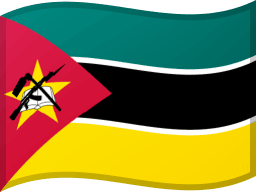







Mozambique
Last updated:
The Mozambican Armed Forces (FADM) present an elevated risk of unlawful use of weapons supplied to them. This assessment rests principally on the conduct of FADM units, most consistently the Navy, in the ongoing non-international armed conflict against Islamic State Mozambique (ISM) in Cabo Delgado, and secondarily on the FADM’s domestic security deployments. Documented incidents in which FADM personnel have arbitrarily detained, ill-treated, and summarily executed civilians on suspicion of ISM sympathies, including the Navy’s killing of thirteen fishermen in Mocímboa da Praia district on 15 March 2026, have occurred against a backdrop of near-total impunity, with no criminal prosecutions for serious violations of IHL by security forces inside Mozambique since the conflict began in 2017.
Mozambique’s law-enforcement sector presents a high risk of unlawful use of force and firearms. The domestic legal framework governing police use of force is more permissive than international standards allow, and the Polícia da República de Moçambique (PRM), most visibly its Rapid Intervention Unit, used lethal and less-lethal force against opposition demonstrators on a mass scale between October 2024 and February 2025 following the disputed October 2024 general election. Credible estimates indicated several hundred people killed and thousands more injured or arrested. Police have also faced consistent allegations of excessive force toward Naparama and other armed or paramilitary actors. Accountability mechanisms remain weak, notwithstanding a limited number of proceedings that were opened.
Mozambique faces a high risk of diversion of weapons supplied to its security forces. Open-source and field research attribute the bulk of ISM’s weaponry directly to Mozambican military and police sources, principally battlefield capture following attacks on security-force camps, border posts, and armouries, supplemented by credible reporting of soldiers and former conscripts selling or otherwise diverting equipment for payment. Some legacy matériel left over from the 1977–92 civil war has been documented crossing into Malawi’s illicit civilian market. Mozambique has not yet submitted its Initial ATT Report, and has not submitted any Annual Report. This significantly limits transparency concerning Mozambique’s national control system. Weak stockpile discipline and documented internal-corruption vulnerabilities across the security sector further raise the risk that weapons supplied to the FADM or PRM could be diverted after transfer.
International legal context
Disarmament Treaties
| Instrument | Status | Comment |
|---|---|---|
| 1980 Convention on Certain Conventional Weapons (CCW) | Not Party | |
| 1980 CCW Protocol I (Non-Detectable Fragments) | Not Party | |
| 1996 CCW Amended Protocol II on mines | Not Party | |
| 1980 CCW Protocol III on incendiary weapons | Not Party | |
| 1995 CCW Protocol IV on blinding laser weapons | Not Party | |
| 2003 CCW Protocol V on explosive remnants of war | Not Party | |
| 2001 Firearms Protocol | State Party | |
| Optional Protocol to the CAT | State Party |
International Humanitarian Law Treaties
| Instrument | Status | Comment |
|---|---|---|
| 1949 Geneva Conventions | State Party | |
| Additional Protocol I of 1977 | State Party | |
| Additional Protocol II of 1977 | State Party |
International Criminal Law Treaties
| Instrument | Status | Comment |
|---|---|---|
| 1998 Rome Statute of the International Criminal Court | Not Party | |
| Amendments to the Statute on the crime of aggression | Not Party | |
| Amendment to the Statute on blinding laser weapons | Not Party |
International Human Rights Treaties
| Instrument | Status | Comment |
|---|---|---|
| 1966 Covenant on Civil and Political Rights | State Party | |
| Optional Protocol to the ICCPR | Not Party | |
| 1966 Covenant on Economic, Social and Cultural Rights | Not Party | |
| 1981 African Charter on Human and Peoples’ Rights | State Party | |
| 1948 Genocide Convention | State Party | |
| 1984 Convention against Torture | State Party | |
| 1988 Protocol to the African Charter on the African Court | State Party | |
| Convention on the Rights of the Child (CRC) | State Party | |
| Optional Protocol to the Convention on the Rights of the Child on the involvement of children in armed conflict | State Party |
| Organisation | Status | Comment |
|---|---|---|
| United Nations | Member State | |
| International Court of Justice | Did not accept compulsory jurisdiction | |
| African Union | Member State | |
| International Atomic Energy Agency (IAEA) | Member State | Safeguards agreement in place |
| Southern African Development Community | Member State |
Domestic Legal Context
Imports, exports, and supplier base
According to the SIPRI Arms Transfers Database, Mozambique’s earliest recorded transfers date to 1975–76, when Portugal – the outgoing colonial power – delivered: 6 Noratlas transport aircraft; 12 T-6 Texan trainer aircraft; 7 SA-316 Alouette-3 light helicopters; 5 C-47 transport aircraft; 4 PA-28 Cherokee and 4 Cessna-180 Skywagon light aircraft; 4 Do-27 light transport aircraft; 2 Auster AOP light aircraft; 1 Alfange-class landing craft; and 1 Bangor-class minesweeper.
Between 1976 and 1986, the Soviet Union, East Germany, and Czechoslovakia delivered at least 43 MiG-21bis and 23 MiG-17 fighter aircraft (11 Soviet and 12 East German); 200 T-34-85 tanks (40 Soviet, 150 East German, and 10 Czechoslovak) and 170 Soviet-supplied T-54/T-55 tanks; 196 BTR-152 and BTR-60PB armoured personnel carriers and 107 BRDM-1/BRDM-2 armoured reconnaissance vehicles; 12 Mi-24D combat helicopters; 104 towed guns across five types (20 each of the D-1 152mm, M-30 122mm, and BS-3 100mm, 24 M-46 130mm and 20 D-30 122mm); 30 BM-21 Grad 122mm multiple rocket launchers and 20 ZSU-57 self-propelled anti-aircraft guns; 3 S-125 Pechora surface-to-air missile systems with 100 V-601 missiles; 330 Strela-1/Strela-2 man-portable air-defence systems (300 Strela-2, delivered 1977, and 30 Strela-1, delivered 1984) and 300 Malyutka anti-tank missiles;. This period corresponds to the 1977–92 civil war between the FRELIMO government and the armed opposition group RENAMO. No transfers are recorded in the data reviewed for 1987–1998.
SIPRI records one transaction in which Mozambique is listed as supplier rather than recipient: 5 BN-2 Islander light transport aircraft, ordered in 1976 and delivered in 1977, to Zimbabwe. This delivery predates Zimbabwean independence (April 1980). No other transaction listing Mozambique as supplier was identified in the data reviewed for this profile.
SIPRI records acquisitions for 1999–2017 that include the following: 1 Conejera-class patrol boat from Spain (2011); 40 FV-432 and 25 Saxon armoured personnel carriers from the United Kingdom; 1 L-39Z Albatros trainer/combat aircraft from Slovakia, and 3 Ocean Eagle-43 patrol boats from France (all ordered 2013); 6 Mirage light aircraft from Germany (2014); and 12 VN-3 and 12 ZFB-05 armoured personnel carriers from China, and 3 HSI-32 patrol boats from France (2015).
By order year, SIPRI records the following since 2018: 23 Tiger AV armoured personnel carriers from China (2018); 1 Mi-17 transport helicopter from Russia (2018); 2 L&T FIC patrol boats from India (2019); 12 Marauder armoured personnel carriers from South Africa (2019); 2 Mi-24V combat helicopters and 3 Mi-17 transport helicopters, both entries listing the supplier as ‘unknown’ (2020); 3 Mwari ground-attack aircraft from South Africa; and 6 MCAV-20 armoured personnel carriers from the United Arab Emirates (2023). Delivery is not yet recorded in the data reviewed for the Mwari aircraft. Two distinct designations – the Mi-24V and one of the two recorded Mi-17 transactions delivered in 2021– list the supplier as ‘unknown’; a separate, earlier Mi-17 transaction is attributed to Russia.
Open-source defence reporting documents further items not reflected in the SIPRI Arms Transfers Database, which does not track small arms or services contracts: a SIPRI 2021 reported British supply of assault rifles and armoured personnel carriers to Mozambican forces, at approximately 215 rifles; and the contracting of the South African private military company Dyck Advisory Group to fly armed helicopter missions against ISM between April 2020 and April 2021.
Domestic legislation relevant to the Arms Trade Treaty
National framework
The principal framework identified for the equipment and armament of Mozambique’s Defence and Security Forces (Forças de Defesa e Segurança, FDS) is Decree No. 34/2007 of 10 August, approving the Regulamento sobre o Equipamento e Armamento das Forças de Defesa e Segurança. The decree governs the equipment of the Defence and Security Forces and provides the framework for the acquisition and management of defence and security equipment. Its title, date, and publication details are corroborated by a contemporary academic source citing the Boletim da República as the legal source but the original text could not be located.
Secondary analysis of Article 11 indicates that the import and export of FDS equipment require prior authorization by the Ministers responsible for Defence, Interior, and Finance, with additional authorization by the Commander-in-Chief for lethal equipment.
The broader defence-policy framework is provided by Law No. 12/2019 of 23 September, on Defence and Security Policy, which replaced the earlier 1997 framework. The law establishes the general principles and objectives of Mozambique’s defence and security policy, while the Ministry of Defence is responsible for implementing defence policy and the President exercises the constitutional role of Commander-in-Chief of the Defence and Security Forces. Article 6 provides that the equipment policy for the Defence and Security Forces is to be established by law, while Article 21 promotes public-private partnerships and gives priority to domestic production of strategic defence and security products. Article 21(4) further recognizes the defence industry and production logistics as important to maintaining stable supplies for defence and security.
Military procurement is also subject to Mozambique’s general public-procurement framework, currently governed by Decree No. 79/2022 of 30 December, as amended by Decree No. 46/2026 of 5 August 2026. The Regulation permits direct contracting (ajuste directo) for certain national defence and public-security procurements, including classified military works and the acquisition, repair and maintenance of military equipment and equipment for the exclusive use of the Armed Forces and Police (Article 97(f)). Defence and security contracts falling within these exceptions are exempt from the ordinary publication requirement applicable to direct-contract awards (Article 99(3)). The contracting authority must nevertheless justify the procurement modality, the choice of contractor, and the reasonableness of the price and supply conditions (Article 100), seek the best contracting conditions (Article 101), and communicate direct contracts to the Entidade de Supervisão das Aquisições (Article 102).
The principal current legislation governing civilian firearms and ammunition is Decree No. 8/2007 of 30 April, approving the Regulation on Weapons and Ammunition (Regulamento de Armas e Munições), which governs the possession, use, carrying, import, export, and transit of firearms and ammunition.
Mozambique’s 2014 Programme of Action (PoA) national report stated that Article 47(1) of Decree No. 8/2007 required licences for the import, export, re-import, re-export, and transit of SALW, issued by the National Commissioner of Police. Mozambique confirmed that it did not export SALW. The report indicated that an end-user certificate (EUC) was required for exports, but that Mozambique did not verify or authenticate EUCs, did not impose specific restrictions on the re-export of SALW, and did not require a Delivery Verification Certificate (DVC) confirming that SALW had reached the intended end-user or importer. It also stated that exports without a licence or under simplified procedures were not permitted.
The 2016 PoA/ITI national report provided further information on transfer controls and record-keeping. Mozambique reported that exporters and importers were required to maintain records of transfers, including the quantity and type of SALW, markings, the identity of buyers and sellers, the country of delivery or purchase, and the date of delivery, with records retained for 20 years. Mozambique also continued to request assistance to improve its legislation, regulations, and administrative procedures governing international SALW transfers. The existence of formal licensing requirements therefore coexist with weaknesses in the reported end-user and post-shipment controls. In particular, the absence of EUC authentication and delivery verification reported represents a potential vulnerability in safeguards against diversion.
Mozambique reported that SALW brokering was regulated under Decree No. 8/2007. By 2016, Mozambique stated that, as per Decree 8/2007, brokers were required to register, and that a licence, permit or other authorization was required for each brokering transaction. The same report indicated that activities associated with brokering – including acting as dealers or agents, providing technical assistance or training, transport, freight forwarding, storage, finance, insurance, maintenance and security – were also regulated. Mozambique nevertheless requested assistance to develop policies, legislation, regulations and procedures governing SALW brokering and reported no action against groups or individuals engaged in illegal brokering during the reporting period.
Mozambique provided details on standards and procedures governing the management and security of SALW held by the armed forces, police, and other authorised entities. In its 2014 UN Programme of Action on SALW report, these were said to cover appropriate stockpile locations, physical-security measures, access controls, inventory and accounting controls, staff training, security and control of weapons held or transported by operational personnel, and procedures and sanctions in cases of theft or loss. It stated that reviews of stocks held by the police and other authorized entities were conducted daily to identify surplus or obsolete SALW.
For the reporting period, Mozambique reported the destruction of a range of firearms, including 38 AKM rifles, 18 pistols, 8 machine guns, 8 PPX, 2 Bazooka/RPG-7, 15 PK machine guns, 12 Mauser rifles, 7 G3 rifles, 21 semi-automatic firearms, 6 carbines, 11 FBP, and 2 M20, together with 9,300 rounds of ammunition and munitions. It also reported the collection of 1,938 obsolete weapons, 64,764 items of ammunition and 338 explosives, including mortar shells and hand grenades, for destruction.
Significant capacity-building needs were nevertheless identified. It requested assistance with staff training, dissemination, and improvement of standard operating procedures and support for the regular conduct of its operations, including vehicles, helicopters, destruction equipment, GPS equipment, and staff training. Similar requests for assistance with stockpile management and destruction had already been recorded in the earlier reporting cycles.
Mozambique also reported legislative measures to prevent the manufacture, stockpiling, transfer, and possession of unmarked or inadequately marked SALW. Under Articles 43 and 44 of Decree No. 8/2007, firearms were to be marked during import, export, transit, seizure, confiscation, and transfer to the State. The marking was to include the manufacturer, country and year of manufacture and the initials ‘PRM’.
Mozambique reported procedures for the international tracing of SALW. In its 2014 report, it identified the Ministry of the Interior, Ministry of Foreign Affairs and Cooperation, and Ministry of Justice as responsible for coordinating tracing requests and responses. Tracing requests could include information concerning the circumstances in which the firearm was found, the reasons for considering it illegal or illicit, the intended use of the information, markings and the type or calibre of the weapon. The 2014 report further stated that Mozambique cooperated with INTERPOL on tracing and that a Gun Control System and Ammunition was being implemented with UNDP support.
Mozambique has also reported COPRECAL (Comissão Interministerial para Prevenção, Combate e Erradicação do Tráfico Ilícito de Armas Ligeiras e de Pequeno Porte) as its national coordination mechanism for SALW control. The PoA reporting describes COPRECAL as an inter-ministerial commission responsible for coordinating SALW-control activities within the framework of the PoA. The same institutional arrangement was reported in Mozambique’s earlier national reporting.
Overall Mozambique’s PoA reporting indicates a formal SALW-control framework, but also identifies persistent implementation and capacity gaps, including weaknesses in diversion safeguards, which should not be assumed to fully reflect current practice given the dated reporting period.
At regional level, Mozambique is also a State Party to the 2001 SADC Protocol on the Control of Firearms, Ammunition and Other Related Materials, which requires States Parties to adopt national measures addressing illicit manufacturing and trafficking, licensing and control of firearms, marking, record-keeping, tracing and cooperation and information exchange.
Transparency and reporting
Mozambique has not submitted its Initial ATT Report, and has not submitted any Annual Report. This significantly limits transparency concerning Mozambique’s national control system and its implementation of the ATT. Mozambique has not submitted reports under the UN Register of Conventional Arms (UNROCA).
Mozambique has, though, submitted a number of reports under the UN Programme of Action on Small Arms and Light Weapons (PoA) and International Tracing Instrument (ITI) (2005, 2008, 2010, 2011, 2012, 2014, and 2016). These reports provide information on national legislation and administrative measures concerning SALW transfers, brokering, stockpile management, marking, record-keeping, and tracing, but they pre-date Mozambique’s ratification of the ATT and the information is not up to date.
Overall, Mozambique’s transparency record is weak, leaving significant gaps in publicly available information on its national implementation measures and international arms transfers.
Key weaponry in the armed forces
Strategic position and defence posture
Mozambique’s defence posture is dominated by a single, deep-seated internal security challenge: the non-international armed conflict against Islamic State Mozambique (ISM, also known as Ahlu Sunna Wal-Jama or, locally, at its origin, as ‘Al-Shabaab’) in Cabo Delgado, the country’s northernmost province. The conflict began in October 2017 and has since spread into the neighbouring provinces of Niassa and Nampula; ACLED put the conflict’s cumulative death toll at 6,257 as of October 2025, eight years after the first attack, while War Watch[CMS1] put the toll a year later at more than 6,600 killed since 2017. The UN Security Council’s ISIL (Da’esh) and Al-Qaida Sanctions Monitoring Team, reported by AllAfrica, estimated in an August 2026 report covering December 2025 to March 2026 that the group had grown to between 400 and 500 fighters, typically operating in small cells of ten to fifteen. Its origins are contested, but the discovery of ruby and natural gas deposits in the province – and the manner of their governance – is widely regarded as a significant aggravating factor.
The most consequential of these resources is the US$20 billion TotalEnergies liquefied natural gas (LNG) project at Afungi, suspended after an ISM attack on the nearby town of Palma in March 2021 and restarted in January 2026. Protection of the Afungi site and its surrounding infrastructure has itself become a significant driver of the external security assistance described below; as the ACLED analyst Peter Bofin has observed of the resulting disparity in protection, ‘resentment that people feel, caused by the project getting better security than they do, erodes the companies’ social license to operate, undermining already weak state legitimacy’ and reinforcing a sentiment among some coastal residents, voiced to a journalist in March 2026, that it is ‘better to come across insurgents than soldiers’.
Cabo Delgado’s location on Mozambique’s northern Indian Ocean coast also gives the conflict, and the security response to it, an important maritime dimension: the province’s extensive coastline has been used by ISM for movement and logistics, prompting a naval as well as land-based response, including reported Mozambican naval operations against fishing vessels on the basis that insurgents have at times used coastal routes disguised as civilian fishermen – the unlawfulness of which is addressed below.
FADM’s response to the insurgency has relied heavily on external military assistance rather than independent capability. Mozambique has received bilateral support from Rwanda since July 2021 and, until most contingents’ withdrawal in 2024, from the multinational Southern African Development Community’s Mission in Mozambique (SAMIM, drawing on troops from Angola, Botswana, DR Congo, Lesotho, Malawi, Namibia, South Africa, Zambia, and Zimbabwe). Rwanda’s deployment has grown substantially since 2021 and is now by far the largest external force in Cabo Delgado, tasked in significant part with protecting the Afungi LNG site, and is supplemented by a smaller Tanzanian contingent along the shared border. The European Union does not participate in hostilities but funds and delivers FADM training and capacity-building through the European Peace Facility, via the EU Training Mission (EUTM Mozambique) and its 2023 successor, the EU Military Assistance Mission (EUMAM Mozambique), and separately funds Rwanda’s own deployment.
The government has also sanctioned auxiliary local forces – Forças Locais (‘Local Forces’) – formally placed under the Ministry of National Defence by Council of Ministers Decree No. 15/2023 and composed mainly of demobilized soldiers. Per ACLED’s profile of the militia, it remains otherwise unpaid, with members historically relying on ad hoc income such as escorting vehicles along routes like Palma–Mueda. A distinct paramilitary phenomenon, the Naparama, has also mobilized against ISM. The Naparama is a spiritual militia that first emerged during the 1980s civil war; its fighters are forbidden from using firearms and are believed by adherents to be rendered bullet-proof by ritual. It remobilized against ISM from 10 November 2022 in Namuno district, Cabo Delgado, initially with the government’s encouragement, including an invitation from FRELIMO’s own provincial leadership for Naparama fighters to run checkpoints alongside FADM. That cooperative relationship has since turned, in several northern provinces, into violent confrontation with the state itself (see The Naparama Militia, below).
Mozambique’s defence posture also reflects broader structural constraints on resourcing and coordination. SIPRI-derived data reported in Transparency International Defence & Security’s 2025 Government Defence Integrity Index puts Mozambican military expenditure at approximately US$450.4 million in 2024 (some 6.13 per cent of total government spending), with large portions of defence and security spending classified as State secrets despite a formally comprehensive budget presentation. The Global Initiative Against Transnational Organized Crime’s 2025 Organized Crime Index assigns Mozambique an overall criminality score of 6.63 against a resilience score of only 3.25, with illegal gold, ruby, and tantalite mining and timber trafficking in Cabo Delgado identified as sources of conflict financing, and scores the country 6.50 for arms trafficking specifically. At the policy level, as reported by OHCHR, Mozambique adopted counterterrorism laws in 2018, 2022, and 2023 (Law Nos. 5/2018 and 13/2022, and Law No. 15/2023, subsequently amended by Law No. 4/2024). Its response is anchored more broadly in Law No. 12/2019 of 23 September on Defence and Security Policy and, more recently, the National Strategy for the Prevention and Combating of Terrorism and Violent Extremism, adopted by Council of Ministers Resolution No. 3/2025, which established the National Centre for the Prevention and Combating of Terrorism and Violent Extremism (CNPCTEV) to coordinate implementation.
Composition of the Armed Forces
The Mozambique Defence Armed Forces (Forças Armadas de Defesa de Moçambique, FADM) were established through the integration of the former government army (FPLM) and the military wing of RENAMO by a Joint Commission (CCFADM) created under the October 1992 General Peace Agreement. FADM today comprises an Army, Navy and Air Force under a General Staff, with an estimated active strength of only around 11,000–15,000 personnel – a force that independent assessment describes as still hampered by corruption, poor discipline and widespread equipment unserviceability, notwithstanding defence spending of around 2 per cent of GDP in recent years.
Army
The land component of the FADM is responsible for territorial defence, national sovereignty and responding to security threats including terrorism. The Army is divided geographically into five theatres of operation: North, South, Central, Zambezi, and Tete.
The Army has limited conventional capability. Janes assesses that its effectiveness is constrained by inadequately maintained and largely outdated equipment, a top-heavy structure, and limited operational experience against conventional forces since the mid-2000s. Its capabilities are therefore primarily oriented towards internal security and counter-insurgency rather than conventional warfare.
Personnel and force composition have been further shaped by the 2019 Maputo Accord for Peace and National Reconciliation, under which some 5,200 former RENAMO combatants were disarmed and demobilised from August 2019, with a portion integrated into the FADM and national police. Mozambique also maintains selective compulsory military service for men and women aged 18–35; the statutory period of service was extended from two to five years to professionalise and retain personnel.
The Army’s equipment inventory is predominantly composed of ageing Soviet- and Russian-origin systems, supplemented by limited acquisitions from China, the United Kingdom, and South Africa. There are currently no major dedicated Army procurement programmes, and procurement has generally been sporadic; the European Union has also provided non-lethal military assistance through the European Peace Facility, including equipment and vehicles.
- Tanks and armoured vehicles and munitions
- Missiles and missile launchers
- Small arms and munitions
- Light weapons
Mozambique’s Army operates a mixed inventory of older armoured vehicles and more recent armoured personnel carriers. The current Janes inventory identifies four T-54 tanks, eighteen Casspir patrol vehicles, forty FV430/FV432 tracked armoured personnel carriers, twenty-five Saxon APCs, twelve WZ-551S infantry fighting vehicles, and nine Marauder patrol vehicles in service. Mozambique received four T-54 tanks from the Soviet Union in 1982, all of which are recorded by Janes as remaining in service.
The Army operates eighteen Casspir patrol vehicles, manufactured by South Africa’s Denel Vehicle Systems, with initial delivery recorded in 2000. Janes classifies the Casspir as a wheeled patrol vehicle and records all eighteen as in service.
Mozambique received twenty-five second-hand Saxon armoured personnel carriers from the United Kingdom in 2013. The Saxon is a light APC equipped with a 7.62 mm machine gun; Janes reports that the vehicles are used primarily to transport personnel during internal-security operations.
The FADM received forty FV430/FV432 tracked armoured personnel carriers from the United Kingdom in 2013, all of which are recorded as remaining in service. The FV432 was designed for several battlefield roles, including infantry transport, light fire support, recovery, and artillery command; Janes reports that the FADM principally uses the vehicles as personnel carriers during internal-security operations.
Mozambique received twelve WZ-551S vehicles from China in 2014, all of which are recorded by Janes as in service. Janes reports that an unspecified number have been deployed in counter-insurgency operations in Cabo Delgado.
The FADM ordered twelve Marauder armoured patrol vehicles from Paramount Group, of which nine were delivered and remain in service, with initial delivery recorded in 2021. Janes’ narrative reports that Marauders have been deployed in Muidumbe district, Cabo Delgado, in support of counter-insurgency operations.
Janes identifies the Army’s ground-based air-defence inventory as comprising the 9K32/9K32M Strela-2/2M (SA-7a/b Grail) man-portable surface-to-air missile; Janes does not provide current quantity or deployment information.
Janes identifies the Army’s small-arms inventory as including the Walther P-38, FN 35, Makarov, Stechkin and Tokarev pistols; vz/58, FN FAL, SKS and AK-47/AKM rifles; Star Z-75, FMBP M48, vz/23, vz/25, and Franchi LF-57 sub-machine guns; PK/RPK and SGM machine guns; vz/53 general-purpose machine guns; DShK heavy machine guns; and AGS-17 automatic grenade launchers. Janes does not identify current quantities.
Janes identifies the Army’s infantry-support and anti-armour inventory as including 85 mm D-48 anti-tank guns; 9K14/9M14 Malyutka (AT-3 Sagger) and 9K111/9M111 Fagot (AT-4 Spigot) anti-tank guided missiles; 107 mm B-12 and 82 mm B-10 recoilless weapons; 120 mm M43 mortars; and 85 mm Type 56, 85 mm D-44, and 76 mm M1942 field guns. Janes does not identify current quantities.
Air Force
The Mozambique Air Force (Força Aérea de Moçambique) has had limited combat capacity and inadequate aircraft serviceability since independence from Portugal in 1975. Alongside its formal roles within FADM –territorial defence, internal security, peacekeeping, and protection of citizens and institutions, including relief operations – Janes assesses that it could do little to defend national airspace against a more capable neighbour, and that it relies on help with partners including the United Kingdom and the United States for air relief operations. The service is not deployed outside Mozambique and, as per Janes, has had no operational experience beyond Cabo Delgado, having only re-acquired combat-capable aircraft in 2014. Janes further assesses that additional combat aircraft, together with investment in national pilot training – which the Air Force lacks entirely – would be needed for it to become a viable operational force able to support the other armed services against the insurgency in the north.
Beyond the combat and armed types detailed below, Janes records a Paramount Mwari light surveillance/target-acquisition aircraft (2021). The most significant recent development has been a steady expansion of transport capacity to support operations in Cabo Delgado and the response to recurring natural disasters.
Combat aircraft
The Air Force’s fleet of combat aircraft centres on eight Soviet-era fighters, notably six in-service MiG-21bis (of 48 delivered in 1982) that have been overhauled and upgraded and based at Maputo. A single Czech-built L-39ZO light-attack/trainer jet is also recorded as being in service.
Combat helicopters and armed rotary-wing aircraft
Janes records three Mi-24 attack/air-assault helicopters delivered in 2019 as the Air Force’s principal rotary-wing combat assets. Separately, in early 2021 the Air Force took delivery of two Airbus SA 341B Gazelle helicopters supplied by private military contractors then supporting counterinsurgency operations in northern Mozambique, though Janes records their role as utility rather than armed.
Air-defence systems
Janes’ Air Force inventory records no air-defence systems; man-portable air-defence missiles (Strela-2/2M) are held by the Army (see Ground-based air defence, above).
Unmanned Aerial Vehicles (UAVs)
Janes’ Air Force inventory records no unmanned aerial vehicles. The Mwari light aircraft noted above is a manned surveillance/target-acquisition platform, not a UAV.
Navy
The Mozambique Navy (Marinha de Guerra de Moçambique) is a small force of approximately 200 personnel – which Janes assesses as insufficient given the scale of the insurgency and anti-piracy threats the country faces – oriented towards coastal and riverine patrol rather than blue-water operations. Its FADM responsibilities include territorial defence, regional naval cooperation, and peacekeeping, but Janes reports it is not involved in any current operational deployments and, despite the coastal-patrol capability it has developed since 2016, still cannot conduct independent operations such as anti-piracy, fishery-protection, or force-on-force tasks. It remains heavily reliant on allies including India, Portugal, and South Africa for training and assistance, particularly regarding piracy in the Mozambique Channel, where the South African Navy has maintained an almost permanent anti-piracy presence since 2011 under Operation Copper.
Frigates
Mozambique operates no frigates or other major surface combatants.
Patrol Forces
The fleet’s most capable units are three WP-18 fast attack craft from Abu Dhabi MAR (2015); two in service (out of six) HSI32 fast interceptors delivered in 2016, suited to counterpiracy, counterterrorism, and anti-smuggling missions; and one in service (out of three) Ocean Eagle 43 patrol vessels. Smaller platforms include two Larsen & Toubro-built interceptor boats donated by India in 2019; a single Spanish-built Conejera-class patrol craft (2013); 36 DV15 fast patrol craft from CMN (2016); two Namacurra-class inshore patrol craft donated by South Africa (2004); five in-service Impact RHIB (out of 8) transferred from the United States (2006–07); ten Neuvisa semi-rigid-hull launches, of which the number in service is unknown; a SAFE Boat International coastal patrol craft donated by the United States (2022); and four Solas Marine fast interceptor boats donated by India in 2021 and 2024.
Amphibious Forces
None identified.
Naval aviation
None identified: maritime-patrol tasking is instead performed by Air Force FTB-337G aircraft (see Air Force, above).
Recent and current operations
Counterinsurgency operations
FADM’s principal and effectively sole current operation is the counterinsurgency campaign against ISM in Cabo Delgado, conducted jointly with the Rwandan and Tanzanian forces described above. Fighting intensified in the Catupa forest – ISM’s main base, in the coastal zone of Macomia district – from February 2026z. According to ACLED’s Cabo Ligado conflict monitor, ISM fighters subsequently pushed south through Ancuabe into Chiúre district in late April and May 2026, attacking a succession of villages and displacing more than 13,000 people from Ancuabe alone by 12 May, before withdrawing back towards bases around Macomia after roughly two months in the south.
Terrorist attacks across Cabo Delgado numbered more than 500 between January and August 2025 alone, and 2024 saw civilian-targeting violence along the strategically vital N380 highway corridor between Macomia and Mocímboa da Praia rise by almost 70 per cent compared with 2023, notwithstanding the presence of thousands of Rwandan troops along that same corridor. Since 2021, ISM has increasingly turned to improvised explosive devices, with 45 IED incidents recorded and 35 of them concentrated in Macomia and Mocímboa da Praia districts; the group uses command-wire detonation to target military convoys precisely while filming the results for propaganda, a shift that ACLED assesses has forced FADM and its partners to divert resources toward counter-IED detection and defensive measures rather than proactive counter-insurgency operations.
War Watch’s tracking of the conflict adds further operational detail. FADM announced the killing of ISM’s military leader, Bonomade Machude Omar (‘Ibn Omar’), in August 2023, and by September 2024 President Nyusi announced ISM’s new leader as the Tanzanian national Abu Zainabo (‘Ulanga’) following an internal leadership transition. Fighting nonetheless intensified rather than abated: in May 2024, shortly after SAMIM’s withdrawal, more than 100 ISM fighters mounted what ACLED called one of the group’s ‘most daring operations since the attack on Palma in March 2021’, a multi-pronged assault on Macomia, while Rwandan forces separately claimed to have killed between seventy ISM fighters that same month.
ISM’s growing reliance on IEDs led Rwandan forces to begin using combat helicopters from August 2024 to reduce the risk to ground troops. FADM losses continued into 2025 – it had lost at least forty soldiers since the beginning of the year as of late May, and OCHA recorded May 2025 as the sharpest rise in violence in Cabo Delgado since June 2022 – while UNHCR put total displacement from the conflict at approximately 710,000 people as of May 2025, a broader, earlier figure than the localized 2026 Ancuabe displacement cited above.
Beyond the counterinsurgency campaign, Janes describes a force posture still oriented mainly around domestic security and disaster response rather than external deployment. The Army is distributed throughout national territory but concentrated around Mozambique’s main transport corridors and larger cities and towns; Janes reports that the local population of Cabo Delgado has not been especially receptive to FADM troops deployed there, an attitude it attributes to accusations of human rights violations and violence against civilians (see the section below, Compliance with IHL and Human Rights by the Armed Forces), though local media reported in August 2023 that security forces had begun collaborating with local communities in the province amid reports of ISM fighters themselves approaching communities for supplies and cooperation.
The Air Force, based principally at Maputo International Airport with a slightly higher concentration of bases in the north reflecting the Cabo Delgado threat, has not itself been involved in combat operations – its first combat-capable aircraft having been re-acquired only in 2014 (see above) – and Janes assesses that its inability to contain the insurgency has exposed serious logistical constraints and very limited counterinsurgency capability; it remains heavily dependent on international assistance. This is illustrated by the response to Cyclone Idai in March 2019, when the US Air Force flew more than 120 sorties using C-12, C-17 and C-130 aircraft to deliver over 800 tonnes of relief supplies and the UK’s Royal Air Force delivered a further 20 tonnes via a single A400M sortie on 26 March 2019. Janes frames the episode as demonstrating the Air Force’s inability to manage a major disaster response unassisted.
The Navy, based principally at Maputo alongside coastal-artillery and marine-battalion elements and well placed there to patrol national waters and rivers including the Maputo and Komati, has likewise not been involved in any operational deployment outside the country, reflecting the capability limits described above.
Peacekeeping operations
Mozambique’s own contribution to international peacekeeping is limited and, on current evidence, dormant. Mozambique’s Ministry of National Defence instead states a deployment of around 360 personnel to ONUB from May 2004 to 2006. No subsequent Mozambican contribution to a UN peacekeeping mission was identified.
Compliance with IHL and Human Rights by the Armed Forces
A non-international armed conflict has been ongoing, pitting FADM – supported by the Local Forces militia and the armed forces of Rwanda and Tanzania – against Islamic State Mozambique. Common Article 3 to the 1949 Geneva Conventions and customary IHL govern the conflict; Additional Protocol II of 1977 also applies as treaty law given ISM’s control of Catupa forest, Quiterajo town and, per ACLED’s 2026 assessment, an expanding coastal enclave. This classification carries direct consequences for the analysis below: FADM, the Local Forces, and the Rwandan and Tanzanian contingents are all bound by the full range of Common Article 3 and Additional Protocol II protections for civilians and those hors de combat, and violations by any of these actors are capable of constituting war crimes.
A separate, distinct classification question is posed by the escalating violence between the Naparama militia and State security forces, (addressed in The Naparama Militia, below). Unlike the Local Forces militia, the Naparama have no comparable formal legal ground. As of August 2026, War Watch[CMS1] continued to violence monitored closely as it ‘might evolve into armed conflict’ : whether that violence remains a matter of ordinary law enforcement or has begun to cross the threshold into a second non-international armed conflict is, on the evidence reviewed for this profile, not yet resolved – which for now places the discussion of this group under the law-of-law-enforcement analysis below.
Protection of Civilians and Civilians Objects
Under customary IHL, civilians enjoy general protection from the effects of hostilities unless and for such time as they directly participate in hostilities; parties to the conflict must at all times distinguish between combatants and civilians, and in case of doubt persons must be treated as civilians.
The UN Special Rapporteur on the promotion and protection of human rights and fundamental freedom while countering terrorism’s August 2026 end-of-mission statement (hereafter UN Special Rapporteur) observed that ‘earlier phases of the conflict were marked by serious and widespread human rights violations and suspicion of certain communities’, that the situation ‘appears to have improved over time, which also partly reflects the lower intensity of hostilities’, but that ‘allegations of violations persist’. The Mozambican Navy has repeatedly targeted fishermen along the Cabo Delgado coast on the basis that ISM fighters use fishing boats, disguised as civilian traffic, to move personnel and goods along coastal routes; the same statement recorded ‘repeated alleged killings of artisanal miners, and of over 70 fisherman at sea since 2024’, including the thirteen deaths further addressed below. Human Rights Watch‘s own investigation into that broader pattern found that the coastal movement restrictions imposed for this reason, while framed as necessary to limit ISM’s use of fishing boats, ‘have also significantly affected communities that depend on fishing for their livelihoods’, and that despite the restrictions ‘many local fishermen continue to go to sea out of economic necessity’.
An ACLED assessment of Rwanda’s deployment – built around the RDF’s reputation, since 2021, for prioritizing civilian protection under the doctrine associated with the ‘Kigali Principles’ – found that Rwandan forces have in that time recorded markedly fewer civilian-targeting incidents than their Mozambican counterparts: just two events across three and a half years of deployment, against an annual rate of civilian-targeting activity of 8–21 per cent for FADM and up to 50 per cent for the police, since 2018. The same assessment concluded, however, that this reputation has become harder to sustain since late 2024 – not because of direct harm to civilians, but because of a marked rise in delayed or absent responses to ISM attacks along the very corridor the RDF is tasked with securing.
A dedicated ACLED profile of FADM conduct found that more than 13 per cent of the force’s total recorded engagement in political violence since the conflict began has targeted civilians, with almost 30 per cent of those incidents concentrated in Macomia district alone, resulting in at least 36 fatalities there. The same profile records that after ISM overran a FADM outpost at Mucojo in late December 2023, FADM carried out a series of retaliatory killings of civilians in the area, attributing the pattern in part to ‘the indiscipline of FADM troops’.
This pattern is not new. Human Rights Watch documented as early as December 2018 that FADM personnel had arbitrarily detained, ill-treated, and summarily executed dozens of suspected insurgents and ordinary civilians in Palma and Nangade districts; a twenty-three-year-old farmer detained near Chicuaia Velha in November 2018 recalled that ‘the soldiers would come and take us one by one to the forest, and then we would hear gunshots followed by screaming. Some of them did not come back’. Footage that surfaced in September 2020, geolocated by Amnesty International to a FADM base, showed soldiers identifiable by their ‘lizard’ camouflage, together with Rapid Intervention Police (Unidade de Intervenção Rápida, UIR) personnel in lighter-green uniform, torturing and dismembering detainees, attempting to behead a prisoner, and discarding corpses into what appeared to be mass graves. Amnesty international‘s subsequent, more detailed investigation, published in March 2021, separately documented the extrajudicial execution of a naked woman shot thirty-six times by men in military-style dress as she tried to flee fighting near Awasse, and found that after an attack on Quissanga, government forces had blindfolded and shot several men before dumping their bodies in a mass grave, while taking women to a nearby base ‘to be raped’.
Research by the Clingendael Institute separately recorded soldiers ‘entering homes without permission and raping women’ in Patacua village in the aftermath of the 2021 Palma attack, and the UN Special Rapporteur’s August 2026 end-of-mission statement recorded that ‘allegations have included excessive force, extrajudicial killings, enforced disappearances, arbitrary detention, torture and ill-treatment, sexual violence, transactional sex, and failures to diligently protect civilians’ among the abuses alleged against police, military and Local Forces personnel through to 2026. The same statement traced part of this pattern to what it called ‘an historical policing culture of disproportionate use of force’.
A party to armed conflict is required to take precautions before attacking any object or person, notably by doing everything feasible to verify that the objectives to be attacked are neither civilians nor civilian objects and are not subject to special protection but are military objectives. This duty underpins the principle of distinction. In case of doubt, persons should be treated as civilians. Civilians may be incidentally affected by attacks against lawful targets. However, such attacks must not be disproportionate, and the attacker must take all feasible precautions to avoid or, in any event, to minimize incidental civilian impact.
The Navy’s targeting of fishermen along the Cabo Delgado coast turns on a decisive question: were the individuals fired upon directly participating in ISM’s hostilities? Nothing in the record shows they were more than civilian fishermen, continuing to fish out of economic necessity in defiance of the movement restrictions addressed above, which does not amount to direct participation in hostilities. Absent that showing, the killings cannot be justified as attacks on a military objective but would amount to serious violations of IHL.
A clearly documented incident of Navy fire on fisherman occurred on 15 March 2026 off Calugo village, Mocímboa da Praia district, when the Navy fired on three small boats, killing thirteen fishermen and injuring three others. Human Rights Watch reported that residents said naval personnel ‘first calmly approached the fishermen, but then abruptly opened fire’; one resident recalled that ‘when the military arrived, they first greeted and asked the fishermen where they were coming from. Then the navy left, but about 50 meters later they returned violently’, while another said that ‘the soldiers were stressed and angry, and instead of investigating or arresting, they just killed’.
Reportedly, FADM denied responsibility, stating that the attack had been carried out by ‘insurgents wearing military uniforms to impersonate government forces’; Human Rights Watch called on the authorities to ‘urgently and impartially investigate the incident, hold those responsible for wrongdoing to account, and pay prompt and adequate compensation to the victims or their families’. Research by the Clingendael Institute separately documented FADM or police killings of civilians on suspicion of ISM sympathies in Mocímboa da Praia (three residents killed by Rapid Intervention Unit officers, June 2023), Mucojo (three civilians killed ‘under suspicion of being insurgents’, January 2024) and Macomia (a merchant killed by security-force members, July 2024, sparking clashes between residents and police).
ACLED has separately argued that ISM has, in recent years, tempered its own violence toward coastal communities as it seeks to consolidate ‘a distinct area of influence, marked by the N380 highway and the sea to the west and east, and between Mocímboa da Praia town in the north and Quissanga district to the south’, even as FADM’s conduct in the same areas has not correspondingly improved. ISM itself continues to attack civilians directly: it fired on an Estamos Juntos company bus near Roma village, Mueda district, on 23 April 2026, and again near Nanga village on 4 May 2026.
Attacks may only be directed against military objectives; civilian objects are protected against attack. ISM has increasingly targeted the province’s mineral wealth: raids on artisanal gold and ruby mining sites have become a settled pattern of ISM conduct and a significant source of the group’s income. Between late April and early May 2026, ISM fighters visited the Muaja artisanal gold mining site in Ancuabe district and operated close to the Montepuez Ruby Mining and Gemrock Mozambique concessions, prompting staff evacuations at the latter, part of a broader pattern of mine-targeting that ACLED has separately tracked as a significant and growing source of ISM revenue.
FADM conduct toward civilian objects has also been documented: research by the Clingendael Institute recorded soldiers’ participation in the looting of commercial banks in Palma and of private homes and hotels in the aftermath of the 2021 attack.
Protection of Persons in the Power of Parties to the Conflict
Customary IHL affords special protection to civilians and persons hors de combat who face a specific risk of harm, and prohibits torture, other inhumane or degrading treatment, arbitrary detention and unfair trials against anyone in the power of a party to the conflict.
The clearest documented instance of mass arbitrary detention arose from the FADM’s response to the March 2021 attack on Palma, addressed further below in connection with TotalEnergies’ accountability exposure. Civilians who sought refuge at the Afungi LNG site were held by the Joint Task Force securing the project; research by the Clingendael Institute found that two shipping containers at Quatro Caminhos held approximately 180 people, most of them from the villages of Monjane and Patacua, and that ‘of the original 180, only 26 survived’, while separate groups of young men taken to nearby Ngogi were ‘never to return’. The UN Special Rapporteur’s August 2026 end-of-mission statement recorded that Mozambique’s National Human Rights Commission and Attorney General’s Office were investigating the alleged deaths of ‘up to 224 civilian men who were detained at the Afungi LNG project in 2021’ in connection with the Joint Task Force, and called for the investigation to be ‘promptly completed and publicized’ and to ‘lead to accountability’.
Clingendael’s household-level survey work in Monjane, one of the villages most affected, found that of sixty households surveyed, 57 per cent had at least one member killed and 34 per cent had at least one member disappeared in the same period; the same report documented soldiers extorting civilians for access to evacuation flights at Afungi’s airstrip and participating in the looting of banks and homes in Palma. Separate first-hand testimony gathered by Al Jazeera from residents displaced to Quitunda described soldiers burgling homes and beating and arresting civilians in the siege’s aftermath, including a case in which soldiers bound and arrested a pregnant woman and her husband while beating other family members – testimony which is broadly consistent with the pattern Clingendael and the UN Special Rapporteur separately documented.
ISM has separately, and repeatedly, extorted and abducted civilians for ransom. On 30–31 March 2026, a large group of ISM fighters visited gold mine sites at Minhanha and Ravia in Meluco district, reportedly apparently extorting artisanal miners there for cash or gold. These are acts of pillage that are serious violations of IHL and war crimes. Between 1 and 4 June 2026, ISM fighters active around villages in the Mesa area of Ancuabe district kidnapped an unknown number of people at the N’naua gold mining site, variously reported as children or as miners subsequently released for a ransom of 10,000 meticais each – hostage-taking is a separate war crime. ISM has also detained fishermen for ransom: on 12 January 2026, it took twenty-seven fishermen and their boats at sea off the Palma coast, between Pangane and Olumbi, holding them for six days before releasing them, apparently unharmed, at scattered points further south along the coast.
Foreign Forces and Local Forces: Attribution and Accountability
The presence of Rwandan and Tanzanian forces, SADC’s SAMIM mission (until its July 2024 withdrawal), and the semi-autonomous domestic Local Forces militia raises the same category of attribution questions. The clearest documented allegation involving a foreign contingent concerns South African SAMIM troops: footage that circulated on social media in January 2023, of an incident subsequently dated to November 2022, showed soldiers in South African military uniform ‘throwing the dead bodies on a pile of burning rubbish, along with furniture and other objects’ – conduct that commentary at the time characterized as potentially amounting to the grave breach of mistreatment of the dead under the law of armed conflict, and that Amnesty International separately catalogued among the emerging atrocity evidence from the conflict. SAMIM’s Force Commander announced an investigation, and the then SADC chair said in January 2023 that results would be ‘shared’ once ready; a year later, it was reported that ‘since then there has been no statement by the regional bloc on the incident’, and none has been identified since. ACLED‘s comparative assessment of Rwandan conduct found a markedly lower civilian-harm rate for RDF forces than for FADM or the police, but also documented specific passivity complaints – a Local Forces commander’s complaint that Rwandan units routinely arrived hours late to attacks, and just four RDF-ISM clashes recorded between December 2024 and March 2025 despite RDF’s continued presence along the Macomia coast – raising concerns about the adequacy of the protection foreign forces are providing.
The Local Forces militia’s own conduct has also drawn direct scrutiny. The UN Special Rapporteur’s August 2026 end-of-mission statement recorded ‘reports of violations by Local Force and Naparama groups, including excessive force, arbitrary detention, extortion, misuse of firearms, and abuses concerning checkpoints and curfews’, and called for ‘effective control, discipline, and training of the Forças Locais’ – a recommendation that implicitly acknowledges that the militia’s formal placement under the Ministry of National Defence by Council of Ministers Decree No. 15/2023 has not, in practice, translated into effective command and discipline.
Accountability Mechanisms
No criminal prosecutions have been mounted inside Mozambique for war crimes or crimes against humanity committed during the conflict, notwithstanding formal accountability procedures that the UN Special Rapporteur found to be, ‘in practice’, ‘seriously deficient’ in producing ‘independent investigations, accountability and remedies’. Concluding his August 2026 official visit, the UN Special Rapporteur said he was ‘disturbed by prevailing impunity for serious violations of human rights by security forces since the conflict began’. He noted that Article 92 of Mozambique’s Penal Code contains only a limited number of war crimes and called on the authorities to amend it to incorporate the full range of war crimes recognized under customary IHL. He did, however, welcome the National Criminal Investigation Service (SERNIC)’s decision to investigate the 15 March 2026 killing of thirteen fishermen allegedly by the Navy – the first indication identified of any formal domestic inquiry into a specific FADM use-of-force incident in the conflict.
This is not the first time impunity concerns have been raised. A mass trial in 2019 of individuals suspected of ISM links illustrated the weakness of the evidentiary basis for many FADM and police detentions: the presiding judge acquitted 113 of the 189 defendants for lack of evidence. Marking five years since the conflict began, Human Rights Watch concluded in November 2022 that ‘no one has been held to account for the abuses documented and exposed by Human Rights Watch and other groups’, notwithstanding government forces having ‘also been implicated in serious human rights abuses, including extrajudicial killings, arbitrary detention, sexual harassment, and ill-treatment of detainees’.
The UN Special Rapporteur’s August 2026 statement reached a similar conclusion at the level of the system as a whole, recording that stakeholders were ‘deeply concerned that alleged violations were often not investigated, that investigation outcomes were not publicized, and that few perpetrators were held accountable’, that some perceived ‘an historical continuum of impunity in Mozambique’, and that ‘an urgent shift in political culture is needed, from the President down, to reject impunity’. Mozambique’s Attorney-General opened an investigation in March 2025 into the 2021 Joint Task Force abuses described above, but its outcome remained unknown as of September 2025 as reported by Human Rights Watch. Press freedom around the conflict has come under similar pressure: the journalist Arlindo Chissale was forced from a vehicle by men in military uniform in Cabo Delgado in January 2025 and forcibly disappeared, with his family told fifteen days later that he had been tortured and killed and his body not recovered as of October 2025, while sixteen journalists were briefly detained and stripped of their equipment by soldiers in Macomia in June 2025.
As Mozambique is only a signatory to the Rome Statute, the International Criminal Court has no jurisdiction over crimes committed on Mozambican territory absent a Security Council referral or an ad hoc declaration of acceptance. Outside Mozambique, TotalEnergies faces a potential accountability process in France arising from the March 2021 Palma attack, during which ISM killed or kidnapped more than 1,500 civilians living near the Afungi LNG site; men who sought refuge at the Total facility were separated from the group by force and held in shipping containers by forces providing security for the company, addressed above, and the exact number subsequently killed by those forces is not established.
Nanterre prosecutors opened a judicial investigation into TotalEnergies in mid-March 2025 for potential manslaughter and failure to assist people in danger, of which the company said it was formally informed on 15 March 2025. The European Center for Constitutional and Human Rights (ECCHR) filed a further criminal complaint on 18 November 2025 accusing TotalEnergies of complicity in war crimes, torture and enforced disappearance, alleging that the company ‘directly financed and materially supported the Joint Task Force’ that allegedly ‘detained, tortured and killed dozens of civilians’ between July and September 2021, and that TotalEnergies ‘knew that the Mozambican armed forces had been accused of systematic human rights violations, yet continued to support them’. TotalEnergies ‘categorically rejects these accusations’ and states that its teams ‘provided emergency assistance and evacuated more than 2,500 people’ during the attack.
The accountability gap documented above is one side of the ledger; the other is Mozambique’s approach to those disengaging from ISM, which raises transitional-justice questions. No transitional justice programme is in place in Mozambique, nor is one currently planned specific to the Cabo Delgado conflict. Concluding his August 2026 visit, the UN Special Rapporteur urged the government to formally establish and transparently regulate rehabilitation and reintegration programmes for individuals disengaging from ISM, welcoming the National Strategy for the Prevention and Combating of Terrorism and Violent Extremism’s endorsement in principle of disengagement, deradicalization, rehabilitation and reintegration (DDRR) while noting that ‘there appear to have been few formal DDRR measures thus far’ and that 2024 plans for dedicated rehabilitation centres ‘have not materialized’. He also encouraged the government to explore a negotiated resolution of the conflict, on the view that a purely military solution ‘appeared to be unlikely’ – an assessment echoed by the Mozambican analyst Borges Nhamirre, who warned in October 2025 that an exclusively military approach could see the insurgency persist for decades, on the model of al-Shabaab in East Africa and Boko Haram in West Africa, with a corresponding risk of further erosion of human security and spillover into neighbouring provinces and countries.
Key Weaponry in Law Enforcement Agencies
Legal Framework
Internal law enforcement is carried out by the Polícia da República de Moçambique (PRM) under the Ministry of Interior. The 2004 Constitution provides the framework’s constitutional foundation: Article 40(1) guarantees the right to life and to physical and moral integrity and prohibits torture and cruel treatment, while Article 253(1) tasks the police with guaranteeing law and order while safeguarding security and respecting democratic rights, and Article 253(3) requires the police to act in obedience to the law and with impartiality and independence.
The principal statute governing the PRM is Law 16/2013. Under Article 1(1), the PRM is a non-partisan public service of a paramilitary nature, integrated into the Ministry responsible for public order and security. The PRM remains institutionally and legally distinct from the FADM. Articles 33–34 establish the principal statutory framework governing the use of force and firearms. Article 33 permits the use of force that is ‘strictly necessary and proportionate to the resistance’ encountered where persuasion has failed, including in self-defence or defence of third parties against unlawful aggression, to overcome resistance to lawful police action following a formal warning, and to effect arrests under the criminal procedure law. In all cases, the use of force must comply with the principles of necessity, proportionality and reasonableness. Article 34 provides that, in the exercise of its functions, the PRM has the right to possess and use individual and collective weapons and other auxiliary means appropriate to the performance of its duties. It further provides that the use of firearms is governed by specific regulations.
The Estatuto do Polícia, approved by Decree No. 28/99 of 24 May 1999 and subsequently amended by Decree No. 93/2014 of 31 December, contains additional provisions governing the conduct of PRM members and the use of force and firearms. In particular, Article 73 provides that a member of the PRM may use force and firearms only in situations involving a ‘rationally serious risk’ to his or her life or physical integrity, to third persons, or a serious risk to public security, and subject to the principles of opportunity, congruence and proportionality established in Article 72. Article 92 separately provides that a PRM member has the right to use and carry a personal-defence weapon under conditions to be established by dispatch of the Minister of the Interior.
This framework is reportedly more permissive than international law requires. A further gap concerns less-lethal weapons specifically, for which no comparably detailed operational framework has been identified, notwithstanding the UN Human Rights Committee’s 2021 request that Mozambique explain its framework’s compatibility with the UN Human Rights Guidance on Less-Lethal Weapons in Law Enforcement (see below)
The framework is supplemented by Decree No. 8/2007 of 30 April, Regulamento de Armas e Munições (see above), which regulates the detention, use and carrying, import, export and transit of firearms and ammunition and provides rules concerning classification, licensing, registration and control. The decree expressly distinguishes firearms intended for the Defence and Security Forces from the civilian firearms regime.
The organisational and disciplinary framework was subsequently updated following Law 16/2013. Decree No. 84/2014 of 31 December approved the Regulamento Disciplinar da Polícia da República de Moçambique (RDPRM), while Decree No. 85/2014 approved the new Estatuto Orgânico e Organigrama da PRM. The organisational framework was subsequently amended and republished by Decree No. 58/2019 of 1 July. The 2019 framework places within the General Command the Rapid Intervention Unit (UIR), Protection of High Personalities Unit, Counter-Terrorism and Hostage Rescue Operations Unit, Canine Unit, Cavalry Unit, and Explosive Ordnance Disposal Unit (Article 9(2)). The PRM’s Public Order and Security Branch is also expressly responsible for controlling compliance with legislation concerning the use, carrying, transport and storage of firearms, ammunition and explosives (Article 10(4)(b)).
The legal framework reviewed does not provide a public, detailed list of standard PRM firearms or equipment. Article 34 of Law No. 16/2013 authorizes the PRM to possess and use individual and collective weapons and other auxiliary means appropriate to its duties, while Article 34(2) provides that the use of firearms is governed by specific regulations. The specific regulations referred to in Article 34(2) were not identified in publicly accessible sources.
The PRM’s organizational structure indicates specialised capabilities requiring specialized equipment. The current PRM Organic Statute, as amended and republished by Decree No. 58/2019, provides for specialised units including the Rapid Intervention Unit (UIR), a Counter-Terrorism and Hostage Rescue Operations Unit, a Canine Unit, a Cavalry Unit and an Explosive Ordnance Disposal Unit. The legislation establishes these specialised functions but does not provide a detailed list of the weapons or equipment allocated to each unit.
Recent open-source evidence provides more concrete information on weapons and equipment actually deployed by Mozambican security forces. Amnesty International‘s investigation of the 2024–25 post-election protests verified 105 photographs and videos showing the deployment of Protection Police (Polícia de Protecção – PP), Rapid Intervention Unit (UIR), Traffic Police, military personnel and men in plain clothes likely to include personnel from the State Information and Security Service (SISE). The weapons identified included AK-pattern rifles and handguns; single- and multi-shot 37/38 mm launchers firing tear-gas grenades and kinetic-impact projectiles (KIPs); and shotguns, in some cases reportedly loaded with metal pellets. Because Amnesty’s evidence concerns the broader security forces deployed during the protests, rather than the PRM alone, these findings should not be treated as a comprehensive inventory of PRM equipment.
Amnesty also documented armoured vehicles during the protests, including Chinese-made Dongfeng Mengshi vehicles and South African-produced Casspir mine-resistant vehicles. These vehicles were documented in use by security forces, a category that included military personnel, and therefore their presence does not establish that they form part of the PRM’s standard inventory.
The UIR is a specialized PRM unit responsible for rapid intervention and public-order functions. President Nyusi inaugurated a new UIR facility in Mieze, Metuge district, Cabo Delgado, in September 2024. During the post-election protests, Amnesty documented UIR personnel among the security forces deployed and identified their involvement in incidents involving firearms, tear gas and kinetic-impact projectiles. In August 2026, PRM leadership introduced tighter controls over the deployment of the UIR for public-order operations. Instruction No. 15/CGPRM/GCG/100/2026 reportedly requires express authorization from the Commander-General before the UIR can be mobilised for such operations. The measure followed a finding of the ‘excessive and inappropriate use’ of the UIR in operations that did not require the intervention of special or reserve units, contrary to the legal framework provided for under Articles 25 and 27 of the PRM Law.
Historical PRM planning documents provide additional evidence of equipment requirements and shortages identified at the time, but should not be treated as evidence of the current inventory. The PRM’s Strategic Plan 2003–2012 stated that the police possessed armament in sufficient numbers but that its characteristics were not suited to the PRM’s law-and-order mission. It also reported insufficient quantities of individual and crowd-control equipment, including batons, handcuffs, bulletproof vests, shields, tear gas, rubber bullets, and other riot-control equipment. The plan stated that these shortages had contributed to police action in certain law-and-order operations not being consistent with the principle of proportionality. The same Strategic Plan subsequently identified, more generally, insufficient, incomplete and inadequate equipment and means, the absence at that time of a coherent acquisition policy covering transport, armament and equipment, and weaknesses in equipment-management and maintenance systems. These findings are historical and should not be extrapolated to the present-day PRM.
Overall, publicly available sources do not permit a reliable reconstruction of the PRM’s current standard inventory or the quantities of specific weapons and equipment held by individual units. They nevertheless establish that the PRM has access to conventional firearms and less-lethal weapons and that its specialised units operate in roles requiring additional capabilities. The 2024–25 protest documentation provides evidence of equipment used in particular operations rather than as a comprehensive PRM inventory.
Oversight
Oversight of the PRM combines internal disciplinary mechanisms with external administrative and judicial accountability mechanisms, but there is no dedicated independent civilian police-oversight institution. Internally, Decree No. 84/2014 of 31 December, which approves the Regulamento Disciplinar da Polícia da República de Moçambique (RDPRM), provides the principal disciplinary framework for PRM personnel. It requires police members to comply with the Constitution, laws, regulations, and police instructions and provides for disciplinary sanctions for breaches of police duties and abuses of functions, without prejudice to criminal or civil proceedings.
The PRM’s Council of Ethics and Discipline is an internal advisory mechanism rather than an independent oversight body. Article 36 of the PRM Organic Statute, as amended and republished by Decree No. 58/2019, establishes the Council as a consultative body on ethics and discipline under the direct authority of the Commander-General, with its members designated by the Commander-General. The disciplinary regulation also provides for ethics and discipline councils at provincial level and within PRM training establishments.
External administrative review is provided principally by the Provedor de Justiça (Ombudsman). Under the Constitution (Articles 256-260), the Ombudsman is an independent and impartial institution responsible for protecting citizens’ rights and upholding legality and justice in the actions of the Public Administration. The Ombudsman may investigate cases submitted by citizens and, where investigations indicate serious errors, irregularities or violations by the Public Administration, inform the Assembly of the Republic, the Attorney General and the relevant central or local authority, together with recommendations. The Ombudsman does not have decision-making powers to impose sanctions or independently determine criminal liability.
Law No. 7/2006 (Arts. 3, 15–18 and 25–32) further permits citizens to submit petitions, complaints or claims concerning acts or omissions of public authorities to the Ombudsman. In conducting an investigation, the Ombudsman may carry out inspections, request information and documents and conduct inquiries; where the investigation reveals conduct indicating a criminal offence or disciplinary infraction, the Ombudsman must refer the matter to the Public Prosecutor or the competent hierarchical authority. The Ombudsman therefore provides an avenue for external administrative scrutiny and referral.
Police Compliance with the Law of Law Enforcement and Human Rights
Historical Human Rights Concerns and Regulatory Deficiencies
Concerns regarding unlawful and excessive use of force by Mozambican law enforcement agencies long pre-date the 2024–25 post-election crackdown (below). In its 2013 Concluding Observations on Mozambique’s initial report, the UN Human Rights Committee expressed concern about reports of ‘unlawful killings, arbitrary executions of suspected criminals, excessive use of force by law enforcement officers’ and torture and ill-treatment in places of deprivation of liberty, including police stations and prisons. It also noted the lack of concrete and comprehensive information on investigations, prosecutions, convictions and sanctions, together with reports of impunity among law-enforcement officers involved in such violations. The Committee called on Mozambique to take practical steps to prevent excessive use of force by ensuring compliance with the 1990 UN Basic Principles on the Use of Force and Firearms by Law Enforcement Officials, incorporate the Istanbul Protocol into relevant training programmes, and ensure that allegations of unlawful killings, excessive force, torture and ill-treatment are effectively investigated, perpetrators prosecuted and, where convicted, appropriately sanctioned, with effective remedies and compensation for victims or their families.
The same Concluding Observations separately addressed the policing of demonstrations. The Committee expressed concern about arbitrary arrests and detention of participants in peaceful demonstrations and the reported use of ‘tear gas, water cannons, rubber bullets, and batons by police during demonstrations’. It called on Mozambique to safeguard freedom of peaceful assembly in practice and to investigate and prosecute those responsible for arbitrary arrests, detention and bodily injuries connected with participation in peaceful demonstrations.
These concerns are also reflected in Mozambique’s own subsequent reporting. In its Consolidated Periodic Report to the African Commission covering 2015–2021, Mozambique acknowledged that ‘cases of excessive use of force or torture by law enforcement authorities (Police and prison guards) have been recorded in the country’. The African Commission reproduced this statement in its Concluding Observations and Recommendations and recommended that Mozambique adopt specific legislation on the prevention and prohibition of torture, strengthen the capacity of the National Human Rights Commission as the National Preventive Mechanism, and strengthen independent bodies responsible for receiving complaints and investigating allegations of torture.
These concerns remained unresolved in the Human Rights Committee’s 2021 List of Issues Prior to Reporting. The Committee specifically requested information on Mozambique’s current legislative framework governing the use of force, firearms, and less-lethal weapons by law enforcement officers and its compatibility with the ICCPR, the UN Basic Principles on the Use of Force and Firearms, and the UN Human Rights Guidance on Less-Lethal Weapons. It also asked whether Mozambique had established an independent accountability mechanism capable of receiving and investigating allegations of excessive use of force by law enforcement and security forces.
The same 2021 review raised serious allegations concerning security-force conduct in Cabo Delgado, including arbitrary detention, torture and ill-treatment, enforced disappearance and extrajudicial or summary executions. It specifically asked Mozambique to report on investigations and criminal proceedings concerning alleged unlawful killings and other serious violations committed by members of the security forces. Shortly before this List of Issues process began, then UN High Commissioner for Human Rights stated in November 2020 that she had received reports of human rights violations committed by Mozambican security forces in recent years, including extrajudicial killings, ill-treatment, use of force violations, arbitrary detentions, including of journalists, and unlawful restrictions on the freedom of movement in Cabo Delgado, and called for such allegations to be thoroughly, independently and transparently investigated.
The Committee against Torture reached similar conclusions in its 2013 Concluding Observations. It was ‘gravely concerned’ about allegations of unlawful killings and extrajudicial executions by police and about the use of excessive and sometimes lethal force, particularly when apprehending suspects and controlling demonstrations. It criticised the lack of information on investigations and prosecutions and called for prompt, effective, and impartial investigations, prosecution of those responsible and redress for victims. It further called for clear instructions on the use of force and firearms, adequate training and awareness among law enforcement officers of their personal liability for unnecessary or excessive force. The Committee against Torture had also identified broader accountability deficiencies, expressing concern about persistent impunity for police officers and prison officials accused of torture or ill-treatment and recommending that investigations into such allegations be conducted by an independent body outside police authority, together with an independent complaints system for persons deprived of liberty.
A particularly significant regional assessment followed in 2023. In its Study on the Use of Force by Law Enforcement Officials in Africa, the African Commission on Human and Peoples’ Rights examined Mozambique’s domestic framework and found that the 16/2013 Law requires the police to use only necessary and proportionate force to overcome illegitimate resistance. It also examined Article 73 of the 1999 Police Statute (Decree No. 28/99), which permits a police officer to use firearms where there is a ‘reasonably serious risk’ to the officer’s life or physical integrity, or that of a third person, or where there may be a serious risk to public security, subject to the principles of opportunity, appropriateness, and proportionality. The Commission concluded expressly that this provision is ‘more permissive than international law allows’.
This finding is particularly relevant to the legal framework identified above in this profile. Article 34(2) of Law No. 16/2013 provides that the use of firearms is subject to ‘specific regulations’, while Article 73 of Decree No. 28/99 establishes the substantive threshold for firearm use. However, as noted, no consolidated, publicly accessible operational regulation governing the use of firearms and less-lethal weapons by the PRM has been identified. The 2021 Human Rights Committee’s request for information on precisely this framework, followed by the African Commission’s 2023 assessment, indicates that the regulatory and implementation gap has remained a longstanding concern and has re-emerged during the 2024–25 crisis.
The Post-2024 Election Crackdown
The gravest and most extensively documented instance of unlawful use of force by Mozambican law enforcement is the security-force response to protests following the disputed 9 October 2024 general election. The election commission’s 24 October announcement of results favouring the ruling FRELIMO party’s candidate, Daniel Chapo, was contested by opposition candidate Venâncio Mondlane, who had claimed victory on 10 October; the ensuing protests, which continued in waves into February 2025, were met with a scale of lethal force among the most serious episodes of police violence in Mozambique’s post-civil-war history.
Human Rights Watch documented at least eleven people killed and more than fifty seriously wounded by gunshot in the opening days of the crackdown (24–25 October 2024) in Chimoio and Gondola (Manica province) and Nampula city and province, with riot police deploying dogs, armoured vehicles, live ammunition, rubber bullets, and tear gas fired indiscriminately, including into residential homes. A twelve-year-old girl was shot in the hip while watching a protest from her family’s compound in Nampula, and children as young as one year of age were affected by tear gas that entered homes. Over 400 people were detained in this initial period alone.
As the crisis continued, the toll escalated sharply. Between 21 October 2024 and 16 January 2025, Plataforma DECIDE – a Mozambican civil society monitoring platform that collected reports through a telephone hotline – recorded around 315 people killed and more than 3,000 injured; police leadership itself acknowledged 96 deaths, including 17 of its own officers, as of 23 January 2025, and the Attorney General had by 4 February 2025 opened 651 criminal and civil case files. Amnesty International’s April 2025 report, based on 28 interviews and more than 100 verified videos and photographs covering the period 21 October 2024 to 24 January 2025 across Maputo, Ressano Garcia, Mecanhelas, and Lichinga, documented a consistent pattern: live ammunition and less-lethal weapons fired at demonstrators posing no imminent threat, frequently from moving vehicles (compromising both accuracy and the ability to assess whether individual force was necessary), kinetic impact projectiles used indiscriminately rather than aimed at specific, individually assessed threats, and tear gas deployed directly at people and in confined spaces contrary to its intended use as a dispersal tool.
Specific incidents documented by Amnesty International include: on 26 October 2024, police in Mecanhelas district fired live ammunition without warning at largely peaceful PODEMOS supporters at a bridge, killing one and injuring six; on 12 December 2024, content creator Albino José Síbia – who had more than 60,000 social-media followers – was shot twice while livestreaming a police operation at the Ressano Garcia border crossing and died in transit to hospital, in what Amnesty’s report suggests may have been an extrajudicial execution; on 14 December 2024, police fired tear gas and live rounds into a funeral gathering at the Ressano Garcia cemetery, killing at least two and wounding several, including a journalist, while blocking ambulances from reaching the area; on 7 November 2024, at least three people were killed and 66 injured in Maputo when tear gas was fired from moving vehicles at protesters kneeling with their hands raised, and men in plain clothes were observed firing AK-pattern weapons; on 27 November 2024, a woman was struck and seriously injured by a speeding military armoured vehicle in Maputo, and, less than 100 metres away, a man was hit in the head and upper body by birdshot fired from a moving Casspir vehicle; and on 9 January 2025, as thousands gathered in Maputo to welcome Mr Mondlane, police fired live ammunition and tear gas, killing three (including a 33-year-old man, Carlos Gabriel Guedes Mula) and wounding six, among them a sixteen-year-old shot near the spine
Detention conditions compounded the pattern of unlawful force. Amnesty International documented detainees, including children as young as fourteen held together with adults, denied access to lawyers and family members for extended periods, held in unsanitary, mosquito-infested cells without functioning toilets or bathing facilities, and in some cases beaten and coerced into disclosing phone passwords; over 4,000 people were arrested in total, with the majority of arrests assessed by responding lawyers as arbitrary. The Human Rights Watch World Report 2026 separately records that unidentified gunmen, some in security-force uniforms, killed at least ten opposition officials between October 2024 and March 2025, with no arrests to date.
UN Special Procedures mandate holders raised similar concerns contemporaneously. In a statement issued 15 November 2024, they said that ‘the violations of the right to life, including of a child, deliberate killings of unarmed protesters and the excessive use of force by the police deployed to disperse peaceful protests across Mozambique are very disturbing’, recording that at least 300 people had been arrested since the 9 October 2024 election and that journalists and human rights defenders documenting the unrest faced intimidation and threats, alongside ‘widespread disruption of internet services’.
Other Recent Allegations of Excessive Police Force
The 2024–25 crackdown is the most extensively documented episode, but it is not an isolated one. On 27 October 2023, following Mozambique’s municipal elections, reportedly police fired on demonstrators in both Maputo – where tear gas and gunshots were used against a protest on Avenida 24 de Julho – and Nampula province, where police used live ammunition, rubber bullets and tear gas; at least three people were killed, including a ten-year-old boy in Nampula and a market seller, alongside a police officer. A Nampula police spokesman acknowledged that force had been used because ‘citizens did not comply with the guidelines issued by the police force on the ground to guarantee public order and security’, without offering a more detailed justification for the shooting, and instead attributed responsibility to the opposition for allowing children to join the protests.
More recently, on 29 December 2025, police in the Marraca mining area (Mogovolas district, Nampula province) were involved in clashes with artisanal miners. The local civil-society organization Kóxukhuro said at least thirty-eight people died; police officially acknowledged seven deaths, including one police officer; local radio separately reported a toll of around thirteen. Human Rights Watch concluded that ‘the available evidence indicates that Mozambique police used unnecessary and excessive lethal force, resulting in deaths and injuries’, with witnesses telling a local journalist that police had fired indiscriminately at people during the clashes, and called on the authorities to ‘urgently and impartially investigate’ the incident and hold those responsible to account.
Police Conduct in Relation to Naparama and Other Armed or Paramilitary Actors
A separate issue concerns the PRM’s – and, in some of the operations addressed below, the FADM’s – use of force against Naparama militia and other non-State armed actors. As already noted above, the escalating violence between the Naparama and State forces has not yet crossed the threshold into a non-international armed conflict (see Compliance with IHL and Human Rights by the Armed Forces, above).
The Naparama phenomenon is itself highly fragmented: ACLED cautioned that the label increasingly denotes ‘seemingly unconnected groups of alienated young men’ rather than a single organized militia and commented ‘though symptomatic of fraying social cohesion, they are not united by any clear agenda’. That fragmentation is directly relevant to the incidents described below: whether a given episode constitutes an ordinary law-enforcement operation, a clash with an organized armed group, or conduct forming part of the wider Cabo Delgado conflict cannot be assumed from the Naparama label alone, and is instead assessed incident by incident.
Mozambique’s relationship with the Naparama militia has produced a distinct, escalating pattern of lethal violence that now runs in several directions at once. As already noted above, the movement’s modern incarnation initially operated with the government’s encouragement before that cooperative relationship broke down in several of the country’s northern provinces. On 8 February 2025, police shot dead seven Naparama fighters at the entrance to Aube, near Angoche in Nampula province, after the group mobilized – on its own stated rationale – ‘to force reductions in the price of foodstuffs’ amid a wider wave of cost-of-living unrest; police alleged, without producing evidence, that the group was acting on the instructions of opposition figure Venâncio Mondlane. A second, larger clash followed on 17 April 2025 at Mutuali in Malema district, also in Nampula: police said they killed at least five Naparama fighters while repelling an attempted assault on a security-forces camp, but Archbishop Dom Inácio Saúre, citing local sources including a priest said to have witnessed the killings, put the toll as high as twenty-one, and reported that wounded fighters were denied access to medical care and that some were summarily executed.
The State’s response to this breakdown has not been confined to police use of firearms against protesting crowds. Reportedly, seven days after the Mutuali clash, the FADM deployed up to 300 special forces troops in a multi-day operation to retake Sabe town, in southern Zambézia province, from a group identifying itself as Naparama that had occupied a former RENAMO base there and held almost 300 women and children hostage for up to two months; Brigadier Bernardo Ntchokomala announced the operation’s completion on 24 April 2025, and a local source reported ‘casualties on both sides, though no official figures have been released’ – a multi-day, military-scale engagement that, in contrast to the police-conducted Aube and Mutuali shootings addressed above, sits closer to the conduct-of-hostilities end of the spectrum, without on its own resolving the classification question addressed above (see Compliance with IHL and Human Rights by the Armed Forces, above). As mentioned, ACLED cautions against treating ‘Naparama’ as a single organized armed group at all: a further demobilization of more than 150 fighters in Morrumbala district, also in Zambézia, on 5 March 2026 – a group local authorities characterized as Naparama and as disaffected RENAMO fighters, a claim RENAMO itself denied – led ACLED to describe Naparama as ‘an identity now adopted by seemingly unconnected groups of alienated young men across northern Mozambique’, noting that ‘contemporary Naparama activity had not been seen in Zambezia prior to December 2024’. This fragmentation distinguishes the Naparama sharply from the Local Forces militia addressed above: where ACLED’s actor profile describes Local Forces as state-sponsored and armed by the FDS with firearms, it identifies the Naparama as ‘the only militia to have emerged that has not been State-sponsored in some way’ and that ‘relied on traditional weapons rather than firearms’.
The relationship’s other, more violent face emerged in Cabo Delgado itself in late July 2025. Reportedly, after ISM fighters occupied the Chiúre-Velho police station on 24 July and freed a detained insurgent, youths from the Ocua, Namogelia, and Catapua areas mobilized as a Naparama militia around 27 July — only for ISM to kill at least fourteen of them the following night at Melija village. Two days later, on 29 July, Naparama fighters at Nivenevene village killed two undercover police officers whom they suspected of being ISM infiltrators, locking them inside a building, torturing them to death and burning their bodies. ACLED’s assessment of that period records that ‘July’s advance met no resistance from State forces, and only token resistance from militias’ – the same passivity concern documented elsewhere in this profile in relation to Rwandan forces (see above), but here affecting Mozambique’s own security response to an attack on its own police.
The pattern recurred on a larger scale in mid-May 2026, when Naparama fighters armed only with machetes, spears and bows and arrows – the militia’s own rules reportedly forbid the use of firearms – fought a twelve-hour battle against ISM at Messanja in Chiúre district after the village was set alight; surviving fighters buried twenty-seven dead in a mass grave, though residents told Zitamar News the true toll was forty-two, against just three ISM fatalities, while FADM did not intervene despite being deployed nearby. As one analysis quoted by Africa Defense Forum put it, the militia ‘cannot become the cheap infantry of a war against mobile and better-armed jihadist units’.
Together, these episodes illustrate that lethal violence involving the Naparama now runs simultaneously against the police, against ISM, and – in the militia’s near-total losses at Melija and Messanja – largely unassisted by the State it originally set out to help defend.
Accountability and Oversight
Accountability has been almost entirely absent notwithstanding the scale of the violence. By July 2025, civil society organizations were estimating the total death toll from the four-month crackdown at approximately 400, with around 600 injured, and the Attorney General had opened 31 criminal proceedings against implicated police officers; on 7 July 2025, former PRM Commander-General Bernardino Rafael appeared before the Attorney General’s office as part of that inquiry. As of September 2025, the results of that hearing had not been made public, and Human Rights Watch’s most recent assessment records that no officer had yet been criminally charged. A 23 March 2025 meeting between President Chapo and Mr Mondlane reportedly produced an agreement in principle on free medical care and financial compensation for victims’ families and pardons for arrested protesters, but Amnesty International’s April 2025 report found that, at the time of writing, no compensation had actually been paid beyond one instance of a hospital bill being covered.
Human Rights Watch has called on the government to ensure the ongoing investigations remain independent and impartial and to bring criminal charges against those responsible for serious violations. Amnesty International’s own April 2025 recommendations were directed principally at Mozambique’s own authorities: thorough and impartial investigation of all alleged violations, fair trials for anyone found responsible, and prompt reparation to victims, including restitution, financial compensation, and medical care and rehabilitation. Its recommendations to external actors were more modest than sometimes assumed – calling on the African Union, United Nations, and bilateral partners to monitor Mozambique’s adherence to international human rights standards through the post-election period, and on the African Commission on Human and Peoples’ Rights to engage on the documented violations through its own regional accountability mechanisms – rather than calling for a review of international security cooperation or equipment sales with Mozambique’s security forces specifically.
This accountability gap answers, in the negative, questions already on record from both the Human Rights Committee and the Committee against Torture (see above): neither the PRM’s internal disciplinary framework nor the Constitutional Ombudsman, described in Oversight, above, amounts to the independent investigative mechanism either body called for, and the near-total absence of criminal accountability for the 2024–25 crackdown shows that gap remains exactly as open today as when each Committee identified it.
Other international and regional mechanisms have engaged with the crackdown only at the level of political statement. The African Union Commission’s Chairperson condemned the violence and called for calm in statements issued on 21 October and 26 December 2024, and the AU’s Economic, Social and Cultural Council (ECOSOCC) issued its own statement on 6 January 2025, but a Peace and Security Council emergency session scheduled for 13 November 2024 to consider the crisis did not in fact proceed, and no PSC communiqué or decision resulted. The Southern African Development Community went no further: its extraordinary summit of 20 November 2024 issued a communiqué expressing condolences for lives lost but, as Human Rights Watch noted at the time, ‘failed to criticize the Mozambican security forces for the unlawful use of lethal force’ or to call for any independent investigation.
Mozambique signed the Rome Statute but has never ratified it, so the International Criminal Court has no jurisdiction over the crackdown absent a UN Security Council referral. The most recent international engagement came through Mozambique’s own Universal Periodic Review before the Human Rights Council, on 5 May 2026, where the United Kingdom recommended that Mozambique ‘strengthens the independence and effectiveness of accountability and oversight mechanisms – including the judiciary and the National Human Rights Commission – to ensure prompt, impartial, and transparent investigations of alleged violations, including by security forces’ – a recommendation that restates rather than resolves the institutional gap this profile documents throughout.
Risk of Diversion and Re-Export of Imported Weapons
Battlefield Capture and Internal Diversion to ISM
Open-source and field investigation converge on a single dominant finding: the bulk of ISM’s weaponry comes directly from Mozambican military and police sources, not from external arms trafficking networks. Research by the Global Initiative Against Transnational Organized Crime (GI-TOC) concludes that ‘the bulk of the insurgents’ weaponry comes directly from Mozambican military sources, and includes weapons captured from security-force camps, border posts and police armouries’; footage the group itself released following its March 2020 assault on Mocímboa da Praia showed a weapons cache seized from an armoury there, alongside looted cash. The same research reports that some Mozambican soldiers sold weapons to the insurgency, particularly in 2018 and 2019, and that a senior ISM commander exploited former military contacts to arrange weapons transfers for payment; reporting reviewed separately describes soldiers staging ambushes designed to make weapons losses appear accidental rather than deliberate.
Three additional, less firmly established international supply routes – landing aircraft at Mocímboa da Praia, overland smuggling via the Niassa–Malawi border, and maritime transfer by dhow from southern Tanzania – have been investigated by researchers but remain unconfirmed, and GI-TOC’s own assessment is that any such flows would ‘pale in comparison to the number of weapons sourced from Mozambique’s military’. Battlefield capture has, moreover, remained an active rather than merely historical phenomenon: ACLED records that ISM weapons seizures ‘increased significantly in the second half of 2021’, in apparent response to the Rwandan and SAMIM interventions, and rose sharply again thereafter – from under 2 per cent of ISM operations in 2024 to nearly double that share by the end of 2025.
This diversion pathway carries direct significance for any prospective transfer of arms, ammunition or military equipment to FADM or the PRM: weapons and ammunition supplied to a force with the low serviceability, weak stockpile discipline, and documented internal-corruption vulnerabilities described above face a materially elevated risk of reaching ISM directly, through exactly the mechanisms already observed with Mozambique’s existing Soviet-era and post-2017 inventory.
Legacy Civil-War Stockpiles and Cross-Border Leakage
A second, older diversion risk persists alongside the contemporary one. The disarmament process that followed Mozambique’s 1992 General Peace Agreement, overseen by the United Nations (ONUMOZ) between 1992 and 1994, was incomplete: 2015 Small Arms Survey research records that only around 40 per cent of RENAMO’s officially declared arms-cache locations were ultimately visited under the ONUMOZ mandate, leaving ‘large stockpiles’ whose existence meant that ‘recourse to violence could be sustained as a realistic possibility within the RENAMO leadership’ – a concern credited with helping to make credible the brief resumption of RENAMO–government armed conflict in 2013–15. The subsequent joint South Africa–Mozambique recovery programme, Operation Rachel, was substantial but necessarily incomplete in the same respect: across twenty-eight missions between March 1995 and August 2008 it recovered 51,875 small arms and more than 31 million rounds of ammunition – a scale that itself indicates how much matériel the civil war left dispersed outside State control, without establishing that the process was exhaustive.
Some of this legacy matériel has also been documented flowing across Mozambique’s border into Malawi’s illicit civilian market: Small Arms Survey field research identified the Dedza-Calómué and Mwanza-Zobué crossings as likely entry points for AK-47 rifles and Makarov pistols, while cautioning that the proportion attributable specifically to Mozambican sources, as against Malawi’s own disbanded political militias, could not be precisely established, concluding only that ‘a fair assumption … would be that some, and potentially most, of the weapons used for armed crime in Malawi come from Mozambique’. There is no indication that all civil-war-era caches have since been located and destroyed, and the same institutional weaknesses that leave contemporary counterinsurgency stockpiles vulnerable to diversion apply with at least equal force to any residual caches.
Security-Sector Integrity and Diversion Risk
The evidence set out above points to a security-sector integrity risk that sits alongside, and compounds, a purely physical-security risk. Battlefield capture is partly a function of the operating environment: security-force positions can be overrun, abandoned, or inadequately secured during insurgent attacks, and no realistic level of institutional integrity eliminates that risk entirely. Insider diversion is different in kind: it depends on corruption, weak personnel and supply-chain accountability, and inadequate command oversight, and GI-TOC’s allegations of soldiers selling weapons or staging losses to disguise diversion speak to that separate vulnerability specifically.
That insider vulnerability is not confined to the insurgency-affected north or to ISM-linked diversion specifically: GICHD’s Ammunition Management Activity Platform documents four separate, dated theft incidents from Mozambican military and police stocks between 2012 and 2022 – soldiers stealing firearms, including an AK-47 rifle, from the national armoury in Maputo in November 2012; 2,040 rounds of AK-47 ammunition going missing from a Nampula armoury in 2018; two soldiers stealing an AK-47 rifle from army stockpiles in Maputo in 2020; and a further theft of an AK-47, a pistol and more than fifty rounds of ammunition from a police post in Xai-Xai in 2022 – indicating that insider theft is a recurring feature of Mozambique’s stockpile management generally. Mozambique’s continuing dependence on foreign partners to build basic armoury infrastructure and train personnel in ammunition handling, more than a decade into the insurgency, is itself an indicator of how much further this integrity gap has to close.
Independent assessment of Mozambique’s broader defence-institution integrity corroborates this picture at a systemic level. Transparency International Defence & Security’s 2025 Government Defence Integrity Index gives Mozambique an overall grade of D (35/100), assessed as high risk overall, with defence procurement specifically graded D (33/100): most defence contracts are awarded through single-sourcing or direct award rather than competitive tender, actual acquisition and contracting details are classified under State Secrets legislation, and emergency exemptions adopted in response to the Cabo Delgado insurgency have enabled wider use of direct awards without competitive scrutiny. The same assessment grades financial transparency of defence spending E (27/100, very high risk) and defence operations E (17/100, critical risk) – the latter citing ‘persistent human rights abuses and limited accountability’ and finding that ‘corruption is not treated as a strategic operational risk’ – and separately documents continuing ‘ghost soldiers’ on the payroll, indicative of weak personnel-accountability controls, and private military companies operating in Cabo Delgado ‘with minimal transparency and no effective external scrutiny’. A procurement and personnel-accountability regime this opaque is difficult to reconcile with confident diversion-risk mitigation for arms transfer, irrespective of whatever end-use control commitments a supplying State might separately obtain.
National Capacity to Prevent Diversion
The scale of Mozambique’s historical stockpile-management failures is illustrated starkly by the 22 March 2007 explosion at the Malhazine ammunition depot in Maputo, where Soviet-era ordnance stored since the civil war and considered obsolete detonated in extreme heat, killing at least 103 people and injuring 515; a smaller explosion at the same depot two months earlier, in January 2007, had already signalled the risk.
Mozambique’s international partners have identified physical stockpile security specifically, rather than the general legal framework, as the area most exposed to this risk. Since 2022, The HALO Trust, funded by the United States, has worked with the FADM to build weapons-and-ammunition-management capacity, including the construction of ten armouries and the training of thirty-two personnel in ordnance disposal, armoury management, and store-keeping to international standards.
The European Union’s training mission has pursued a parallel, ammunition-specific track: EUMAM MOZ, delivered by Austrian Armed Forces instructors, ran a Basic Theoretical Ammunition Course in March 2026 followed by a two-week Basic Practical Ammunition Course at Katembe Training Camp, concluding on 5 June 2026 and covering the handling, storage and management of ammunition. That two major partners have prioritized armoury construction and ammunition-handling training is itself an indication of where the practical gap has been identified to lie: physical security and inventory practice at the point of storage.
On the legal framework itself, Mozambique’s Regulamento de Armas e Munições (Decree No. 8/2007 of 30 April, as amended — see above) does contain specific marking, registry and international tracing provisions. Articles 43 to 46 require firearms to be indelibly marked – at import, export, transit, seizure, confiscation or transfer – with the manufacturer, year and country of manufacture and, for weapons entering State custody, the PRM’s own identifying initials, and require the PRM General Command’s Weapons and Explosives Department to maintain a cadastro (registry) of authorizations issued and of weapons seized, recovered, confiscated or reported stolen, together with manufacture, import, export and transfer data; records must be kept for a minimum of ten years and are accessible only to Defence and Security bodies with the Minister of the Interior’s authorization. State-held weapons and ammunition specifically are addressed by Article 106, which requires them to be marked and catalogued, subject to periodic inventory, and stored in PRM or FADM armouries, with other State institutions required to requisition weapons from the PRM – which retains control over them – and individual officials permitted access only via requisition for a specific official mission (Articles 107 and 108 separately govern joint-Ministerial-dispatch acquisition of State weapons and the destruction of obsolete stock).
On international cooperation, Articles 109 and 110 provide that Mozambique may request, and must respond to, other States’ requests for tracing assistance – subject to exceptions for ongoing criminal investigations, national security and confidentiality – and assign the Ministry of the Interior responsibility for Mozambique’s international cooperation obligations in this area, including recourse to INTERPOL assistance for tracing ‘whenever appropriate’. How consistently these provisions are implemented in practice is not answered – a question the transparency record addressed below does nothing to resolve.
That transparency record is markedly incomplete, as previously seen ; Mozambique remains overdue on its initial ATT report and has not submitted any of the Treaty’s required annual reports either. This reporting gap is not merely procedural: an ATT initial report is specifically meant to set out the national laws, control lists, regulations and administrative measures through which a State Party implements the Treaty, including measures relevant to preventing diversion, so its absence removes one of the few channels through which external partners – and this profile – could otherwise verify how the marking, cadastro, and tracing provisions just described actually operate in practice.